
OKR (Objectives and Key Results) is an agile goal management framework. It helps organizations translate strategy into measurable outcomes. This method combines qualitative, inspiring goals (objectives) with quantitative metrics (key results) that track progress. OKR was originally developed at Intel and later popularized by Google. It promotes transparency, focus, and alignment of all teams around a shared vision.
The Formula for Success: O + KR
The core concept of OKR is brilliantly simple. John Doerr, who played a key role in spreading the framework, coined the memorable formula: “I will [Objective] as measured by [Key Results].”
An objective (the “what”) is a qualitative, ambitious goal that establishes direction. It should motivate and inspire.
Example: “We provide the best customer support in our industry.”
Key results (the “how”) are quantitative metrics that indicate whether the objective has been achieved. They must be measurable and time-bound.
Example 1: “Reduce the first response time from three hours to 30 minutes.”
Example 2: “Increase the Net Promoter Score (NPS) from 30 to 60.”
A Comparison of the Evolution of Goal Management Systems
OKR is not the only management approach based on goal setting, nor is it entirely new. Rather, it is an agile evolution of established concepts. A look at its “ancestors” and alternatives, summarized below, highlights OKR’s specific focus.
| Originator / Background | Primary Purpose | Key Characteristics | Typical Techniques & Artifacts | Evaluation & Difference to OKR | |
|---|---|---|---|---|---|
| MbO (Management by Objectives) | Peter Drucker (1954) | Performance evaluation & motivation through participation | Managers and employees jointly agree on goals (often annually). Strong focus on individual performance and bonus systems |
|
Too rigid & risky: When goals are tied to compensation, employees may engage in “sandbagging” (setting artificially low targets). OKR separates goals from pay to encourage innovation. |
| Hoshin Kanri (Policy Deployment) | Yoji Akao (Japan, 1960er – Toyota) | Strategic alignment & quality management | Goals are cascaded across all organizational levels (“Catchball”). Highly process-oriented and focused on error prevention |
|
Too bureaucratic: Extremely powerful for stable processes (Lean/manufacturing), but often too slow and formal for software development. OKR is more lightweight and allows faster course correction. |
| BSC (Balanced Scorecard) | Kaplan & Norton (1992) | Holistic corporate management | Considers four perspectives (financial, customer, process, learning). Frequently used for executive reporting |
|
Control-focused: The BSC is often a “speedometer” (measuring the status quo), while OKR acts more like a “navigation system” (driving change). BSCs tend to become “data graveyards.” |
| OGSM (Objectives, Goals, Strategies, Measures) | P&G (1950er) | Compact strategy planning | Condenses the strategic plan onto a single A4 page (one-pager) |
|
Often “set and forget”: A good starting point for achieving strategic clarity, but it often lacks an operational rhythm. OKR promotes continuous engagement with weekly check-ins. |
| OKR (Objectives and Key Results) | Andy Grove / John Doerr (Intel/Google, 1970er) | Agile growth & focus | Separation of goals and compensation, short cycles (quarterly), stretch goals, and full transparency across the organization |
|
The agility standard: Encourages intrinsic motivation and rapid adaptation. The challenge: It requires discipline and psychological safety because 100% goal achievement is not expected. |
The Difference Between OKR and KPI
One common misconception is equating OKR with KPI (key performance indicator). The distinction becomes clear in the following comparison:
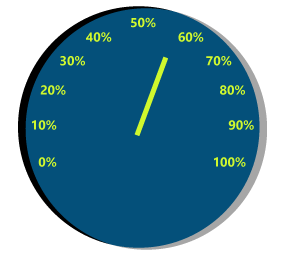
- KPIs are like the speedometer in a vehicle. They measure the status quo and monitor organizational health, answering questions such as, “Are we moving fast enough?” and “Is revenue sufficient?
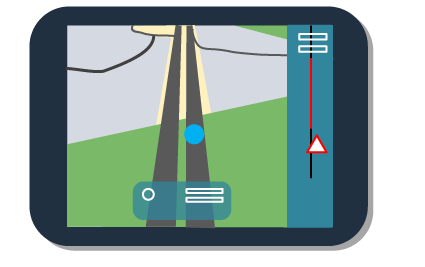
- OKRs, on the other hand, are like a navigation system. They define the destination and the route to get there (“Next exit: market leadership”). They drive change and growth.
- In short, KPIs measure, while OKRs drive change and growth. OKRs transform.
Why OKR?
There are four strong arguments in favor of OKR:
- Focus: You typically limit yourself to three to five objectives per cycle, each with a maximum of three to five key results. Because if everything is important, nothing is important. Less is truly more.
- Alignment: Goals are not simply dictated from the top down. Teams often develop their OKRs from the bottom up, based on company objectives. This ensures that everyone is moving in the same direction.
- Transparenz: In most organizations, all OKRs are visible to every employee.
- Stretch Goals: OKRs are meant to be ambitious. Achieving 70% is often considered a success (“moonshot thinking”).
How Does OKR Work in Detail? The Cycle in Practice
OKR is a recurring rhythm, usually on a quarterly basis, not a one-off event. This cycle ensures that your strategy becomes an operational reality and does not fade into slide decks.
Before entering the operational OKR cycle, it is essential to clarify the fundamental “why” behind your goals. Explore Golden Circle by Simon Sinek to build a strong foundation for your OKR strategy.
Phase 1: Planning and Alignment (2-3 Weeks Before Start of Quarter)
Planning is bidirectional. Management does not define all goals (there is no pure top-down approach).
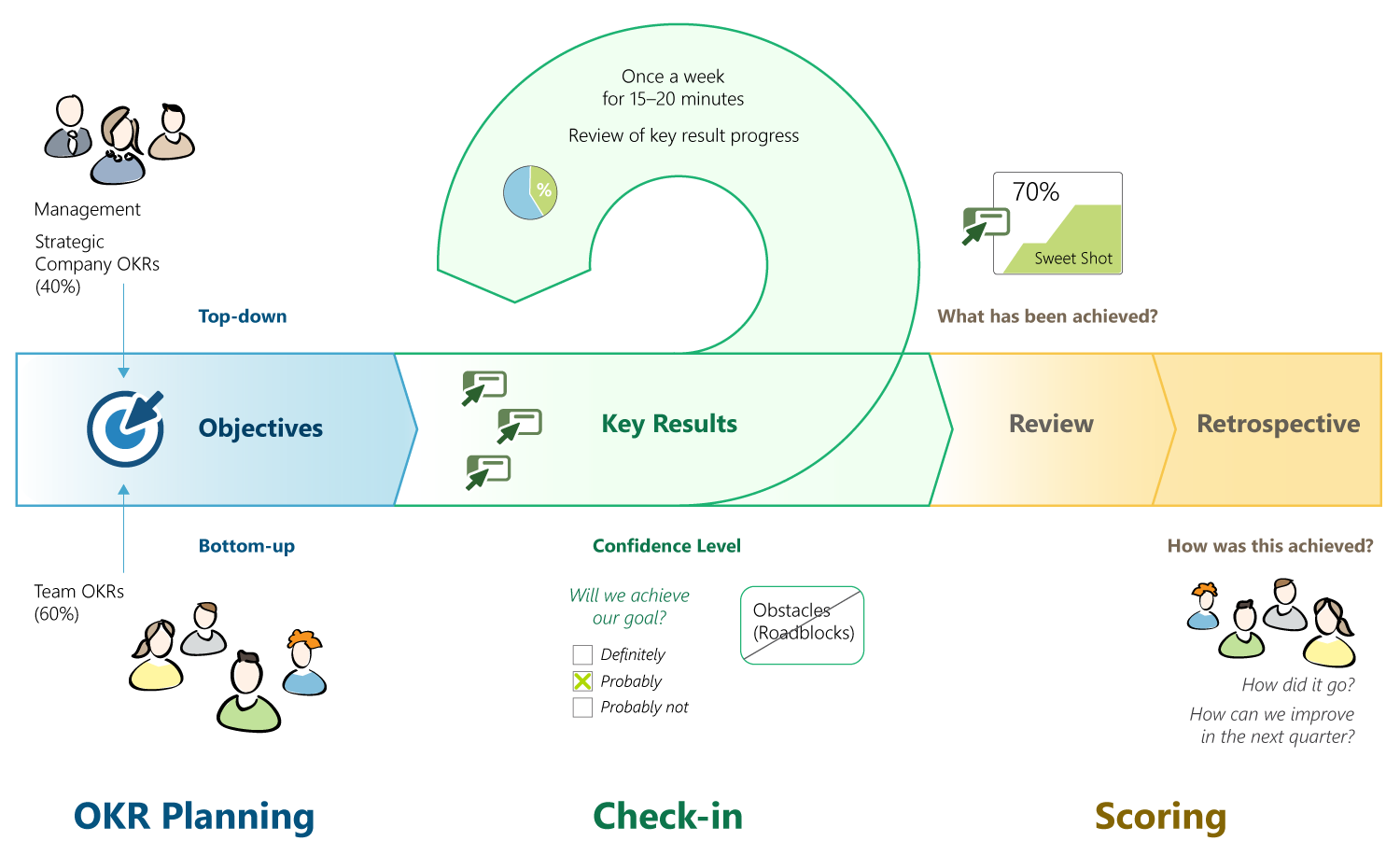
- Top-Down: Leadership defines the company’s strategic OKRs for the upcoming year or quarter (“Where do we want to go as a company?”).
- Bottom-Up: Teams review the strategy and draft their own team OKRs that contribute to it (“How can we support this?”).
- Alignment: In a workshop, goals are aligned. Rule of thumb: Around 40% of goals come from leadership and 60% are defined by the teams. This strengthens ownership and accountability.
Phase 2: Weekly Check-In (During the Quarter)
The weekly check-in is the most critical ritual. Teams meet once a week (often on Monday or Friday) for 15–20 minutes.
- Focus: The discussion is not about task lists, but rather, progress on key results.
- Key Question: “What has changed in the value of this key result? Are we still on track?”
- Confidence Level: The team assesses its confidence level in achieving the goal (e.g., “High,” “Medium,” or “At Risk”). Blockers are escalated immediately.
Phase 3: Review & Retrospective (End of Quarter)
Results are assessed at the end of the cycle. It is important to strictly separate content (What did we achieve?) from process (How did we collaborate?).
- OKR Review (The “What”): Each key result is scored on a scale from 0.0 to 1.0 (see the table below). Results are presented company-wide at an all-hands meeting.
- OKR Retrospektive (The “How”): The team reflects on the process. Were the goals too ambitious? Did dependencies with other teams create bottlenecks? What can we improve on next quarter?
When Is a Goal Achieved? Scoring
| Score | Recommended Action | |
|---|---|---|
| Missed | 0.0 – 0.3 (0 % bis 30%) | Very little progress was made. Analysis is required: Was the goal unrealistic, or were there significant blockers? |
| Progress | 0.4 – 0.6 (40 % bis 60 %) | Solid progress, but the objective was not fully achieved. |
| Sweet Spot (Success) | 0.7 (70 %) | The ideal outcome. Because OKRs are intentionally ambitious, achieving around 70% is considered a strong success. |
| Perfect (or too easy?) | 1.0 (100 %) |
Exceptional result. If this happens frequently, the goals were likely not ambitious enough (“sandbagging”). |
Why OKR Often Stalls in Practice
Despite its simplicity, many organizations struggle with implementation due to these common hurdles:
- “Tool silos”: Strategies become invisible in static documents. Strategic goals exist in PowerPoint decks or Excel spreadsheets, but teams work in entirely different systems. The connection between daily tasks and strategic objectives is missing.
- High maintenance effort: Weekly check-ins become burdensome when data must be manually consolidated from multiple sources. Over time, the ritual fades.
- Lack of structure: Teams often struggle to formulate Key Results that are technically linked and measurable.
objectiF RPM offers a dedicated project template to support OKR implementation. In projects based on this template, the strategy is visible to everyone in the form of clearly defined objectives and key results. Users do not need to worry about the technical link between Objective -> Key Result -> Requirement because it is predefined in the template. This means:
- Traceability: In objectiF RPM, you can create an “objective” as a structured element and link it directly to the requirements or user stories to which it contributes. The relationship remains fully traceable at any time.
- Live Progress: Instead of manually collecting data at the end of the quarter, you can see the real-time progress of the linked requirements at any time.
- Visualization: Use dashboards to display the status of your key results in real time based on actual project data.
Your Tool for Professional OKR
Discover OKR, supported by objectiF RPM.
FAQ
Should OKRs be tied to salary bonuses?
No, because to foster innovation and risk-taking (“stretch goals”), OKRs must not be directly linked to bonuses. This is one of the core principles. Otherwise, employees tend to play it safe and set lower targets (“sandbagging”).
Can OKRs change during an ongoing cycle?
In principle, the cycle (e.g., three months) provides the necessary focus. OKRs can be adjusted during extremely dynamic phases (e.g., a pivot or a crisis). However, this should be the exception to avoid confusing and demotivating teams with constant changes in direction (“agile focus” instead of “arbitrariness”).
What happens to key results that were not achieved by the end of the quarter?
They are not simply “pushed” into the next quarter. First, the review analyzes whether the goal is still relevant. If so, the goal is reformulated for the new cycle and, if necessary, adjusted to be more ambitious or realistic. If conditions have changed, the goal is consistently stopped.
How can I quickly start using OKR in objectiF RPM?
Use the OKR template. It provides a ready-made framework with all the necessary elements and relationships. Use it to set up your project. Import your vision document, derive objectives, and link them directly to your existing backlog. Traceability is automatically built in.
Want to Know More?
Explore more knowledge base articles online or download one of our whitepapers.
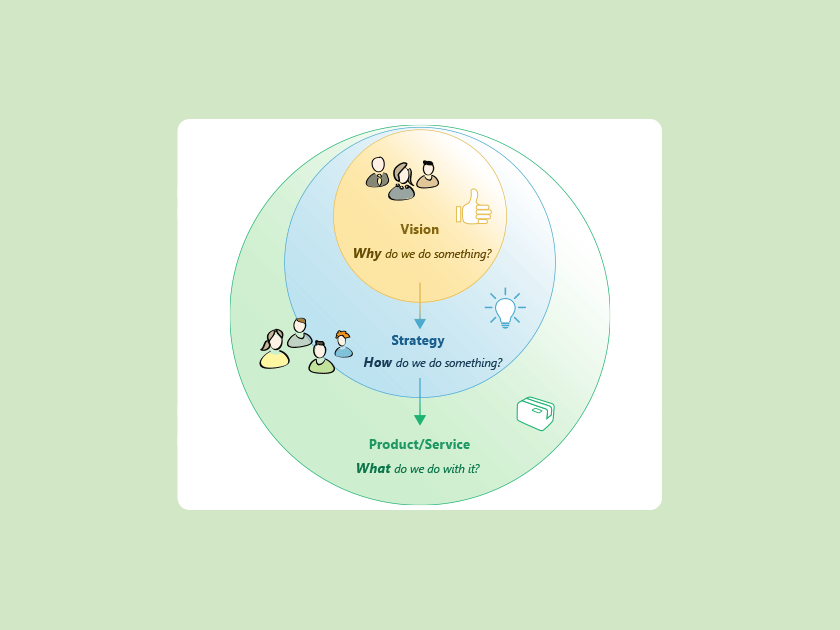
What is the Golden Circle?
Why do you do what you do? Simon Sinek’s Golden Circle model illustrates the difference between vision (why), process (how) and product (what). Find out how this model can be used to create successful OKRs.
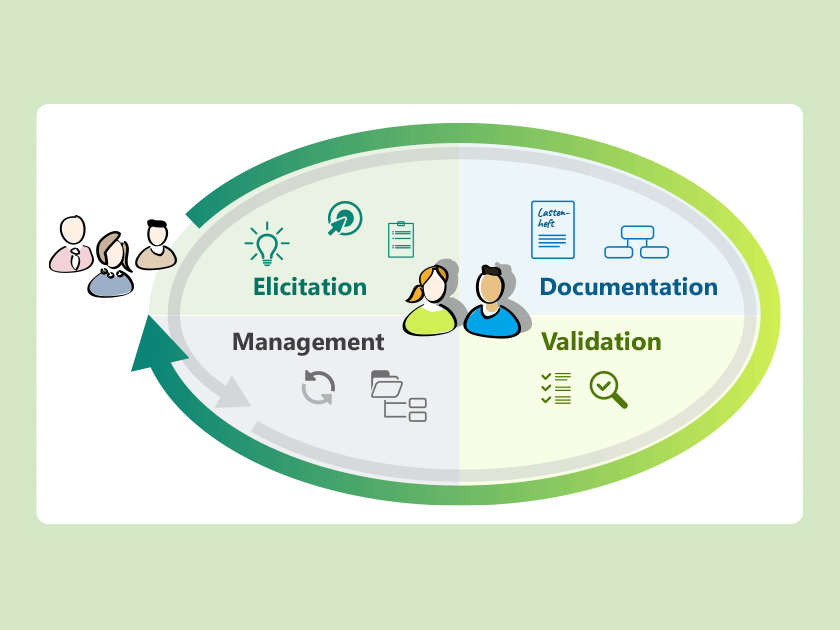
What is Requirements Engineering?
Requirements engineering (RE) involves eliciting, documenting, validating, and managing requirements. Learn how professional RE can safeguard your projects.
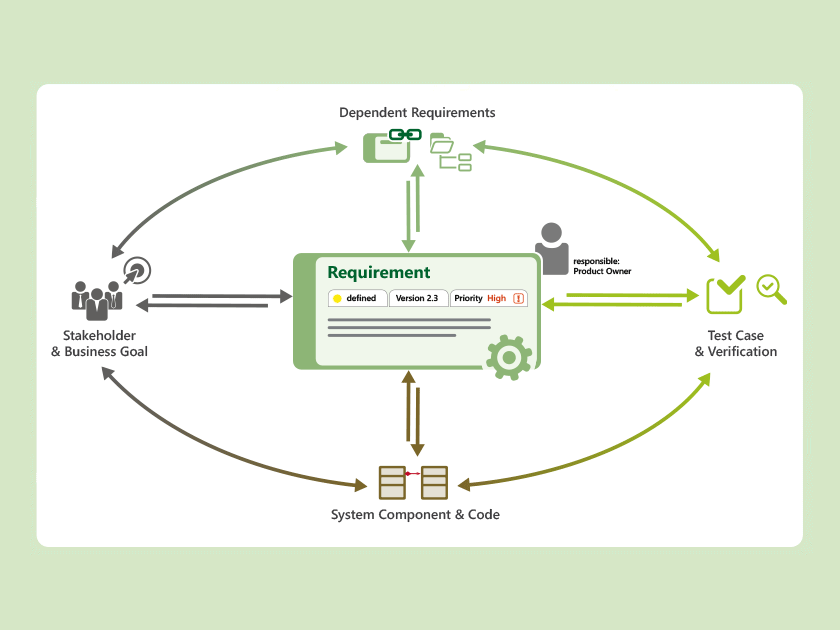
What is Requirements Management?
Requirements management (RM) involves managing requirements throughout their lifecycle. Learn how RM differs from requirements engineering and how tools can assist with the process.