

Hybrid project management combines traditional (plan-driven) and agile (iterative) approaches in a structured way. The goal is to integrate the planning reliability and governance structure of waterfall-type or V-model frameworks at the strategic level with the flexibility and responsiveness of agile methods, such as Scrum or Kanban, at the operational level. This allows organizations to meet complex compliance requirements while reacting quickly to changing market conditions.
The Best of Both Worlds
In today’s project landscape, it’s rarely an “either-or” decision. Hybrid project management leverages the strengths of both approaches:
From traditional project management, it adopts high-level phase planning, budget control, and clearly defined milestones (governance).
From agile methods, it adopts team-level working practices, such as short sprints, continuous feedback, and backlog-driven execution.
This approach ensures management retains strategic oversight while delivery teams maintain the autonomy to solve tasks efficiently and adaptively.
When Does Hybrid Project Management Make Sense?
A hybrid approach is particularly valuable in the following scenarios:
- Partially unclear requirements: The overall framework is fixed (e.g., plant construction), but the software components must be flexible.
- Regulated industries: Formal milestones must be met for audits (e.g., ISO or Automotive SPICE), but teams prefer agile execution.
- Large organizations: Traditional structures require modern, agile processes for product development.
- High-risk initiatives: Projects with fixed deadlines and budgets cannot rely solely on exploratory agile approaches.
Key Advantages of the Hybrid Model
Organizations benefit from hybrid project management in the following ways:
- Planning reliability: Stakeholders gain dependable timelines via a structured roadmap.
- Higher quality outcomes: Agile feedback loops enable earlier error detection than purely sequential models.
- Greater team acceptance: Teams are not constrained by rigid plans and can optimize their workflows.
Improved risk management: Risks can be addressed strategically in advance and operationally during sprint execution.
Hybrid Planning and Execution in Detail
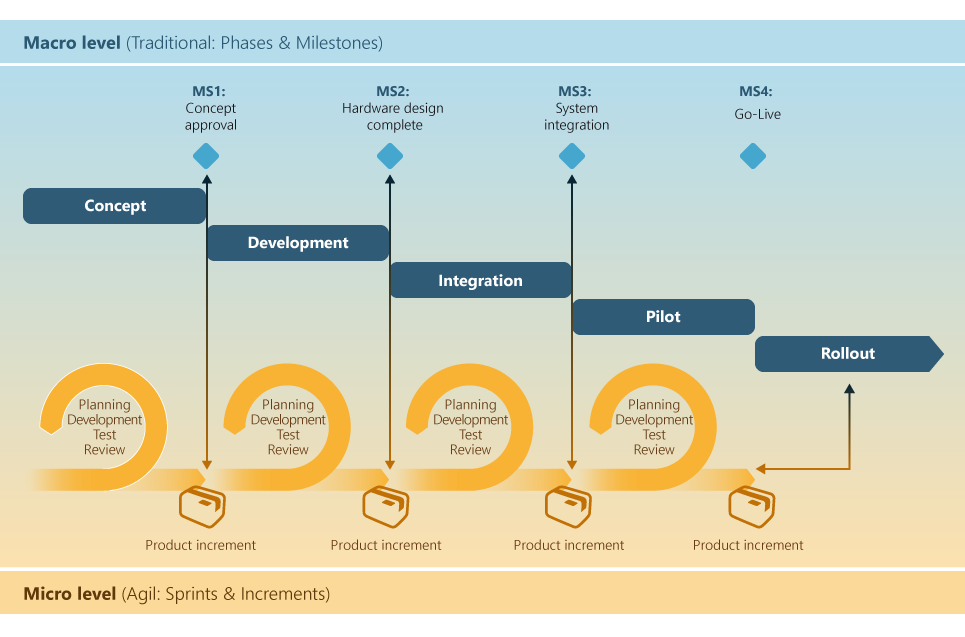
The challenge of the hybrid model is synchronizing two different paces: the slow, strategic level (months or quarters) and the fast operational level (weeks). This is accomplished by clearly distinguishing between the macro and micro levels.
1. The Macro Level: Strategic High-Level Planning (Traditional)
At the highest level, the project is structured according to a traditional phase model. This model establishes the overall guidelines:
- Phases and Milestones: The initiative is divided into major stages (e.g., concept, development, pilot, and rollout). Milestones represent key decision points or commitments to deliverables for stakeholders.
- Structural framework: Budgets, resource planning, and high-level timelines are defined and governed at this level.
2. The Micro Level: Operational Detailed Planning (Agile)
Within traditional phases, typically during implementation, teams work in an agile manner.
- Timeboxing: Instead of creating a detailed Gantt chart for each task, work is organized into sprints.
- Backlog Management: Requirements are transferred to the product backlog, where they are refined into user stories and executed autonomously by the team.
- Iterative delivery: Each sprint delivers a functional increment while the overarching project phase is still ongoing.
3. Synchronization: Milestones as Anchors
The heart of hybrid execution is linking the two levels. For example, a milestone in the macro plan can act as a deadline for a series of sprints.
Example: The “Beta version completed” milestone on the traditional roadmap prioritizes the agile backlog, ensuring that all necessary user stories are delivered within the sprint cycles leading up to that date.
4. Monitoring: Hybrid Controlling
Progress tracking combines instruments from both worlds.
- Milestone Trend Analysis (MTA): Monitors strategic deadlines.
- Burndown charts: – Track team velocity and capacity during sprints
- Status aggregation: Modern tools, such as objectiF RPM, automatically consolidate agile progress and indicate whether traditional milestones are at risk at the macro level.
Practical Example: Hybrid Development of a Certified Medical Device
Consider the development of a smart, AI-driven ultrasound system to illustrate the synergy between traditional governance and agile execution. Such environments require the seamless integration of physical hardware, safety-critical firmware, and a user-centric software interface.
1. Initial Situation
The project is subject to strict regulatory requirements. Hardware components, such as transducers and electronics, must pass lengthy certification procedures. At the same time, AI-based image analysis must be developed iteratively to incorporate feedback from clinical test users. A rigid software plan would result in an outdated product, and a purely agile hardware approach would jeopardize regulatory approval.
2. Hybrid Implementation
- Macro Level (Traditional): The project manager uses a structured phase model (e.g., the V-model) to ensure compliance. Fixed milestones are defined for the design input phase, hardware verification, and final clinical evaluation. These milestones are essential for audit readiness and regulatory approval.
- Micro Level (Agile): The software team works in Scrum sprints to iteratively develop the user interface and analysis algorithms. Each sprint delivers a new functional capability (e.g., automated organ measurement) for evaluation by medical professionals.
3. Synchronization (The “Compliance Anchor”)
Defined synchronization milestones connect both worlds.
- Traceability checks: At the end of every third sprint, Agile user stories are automatically linked to classical system requirements, ensuring audit-ready traceability.
- Hardware–software alignment: A traditional milestone marks the point at which the firmware must be deployed on the final hardware revision. The agile backlog is prioritized accordingly, ensuring that all safety-critical features reach “Done” status on time.
4. The Outcome
The hybrid approach minimizes the risk of missing regulatory approval due to insufficient documentation. At the same time, the product remains technologically cutting-edge at launch because its software capabilities are continuously refined based on real user feedback.
Hybrid Project Management in Practice
The „Two-Tool Problem“
Management plans using one set of project tools, while teams use separate backlog tools, resulting in unsynchronized data.
objectiF RPM connects both worlds in a single database. Plan milestones traditionally and derive agile backlogs directly for delivery teams.
Compliance in Agile Environments
How can agile sprint outcomes be documented for formal audits?
objectiF RPM provides the procedural framework, such as the V-Model XT, while giving teams the freedom to execute tasks agilely. Documentation is generated automatically in the background.
Lack of Transparency:
How can stakeholders track overall progress across multiple sprint cycles?
objectiF RPM: Hybrid dashboards provide real-time visibility into how sprint progress contributes to overarching project goals.

The Best of Both Worlds — Without Methodological Trade-offs
Why choose between predictability and flexibility when you can have both? Hybrid project management reflects the realities of modern markets. objectiF RPM builds the bridge: plan your roadmap classically and manage execution agilely all within one integrated solution.
FAQ
What is the biggest advantage of a hybrid approach to project management over a purely agile approach?
The main advantage is reliable, scalable planning. Purely agile approaches often have difficulty predicting long-term fixed deadlines, such as trade fairs or product launches. Hybrid models provide reliable milestones through macro-level planning while maintaining operational flexibility.
What role does the project manager play in the hybrid model?
The role is shifting from that of a “commander” to that of a “facilitator.” The hybrid project manager sets strategic parameters, such as budget, deadlines, and stakeholder management, and gives teams the freedom to manage operational implementation independently, as in Scrum or Kanban. The hybrid project manager serves as the interface between the planning and sprint worlds.
Is “Water-Scrum-Fall” the same as hybrid project management?
Yes, “water-scrum-fall” is a popular—and sometimes ironic—term for a hybrid approach combining planning (waterfall), development (Scrum), and the release process (waterfall). However, “hybrid project management” is the professional umbrella term for all methodological hybrid approaches that deliberately combine the strengths of both worlds.
How is documentation handled in hybrid project management?
The hybrid model is ideal for regulated industries. The team works in an agile manner, documenting progress in backlogs, and the results are regularly reconciled with traditional requirements. Tools such as objectiF RPM establish the necessary audit traceability without requiring additional manual effort.
In which cases is a purely traditional or purely agile approach preferable?
Want to Know More?
Explore more knowledge base articles online or download one of our whitepapers.
What is Traditional Project Management?
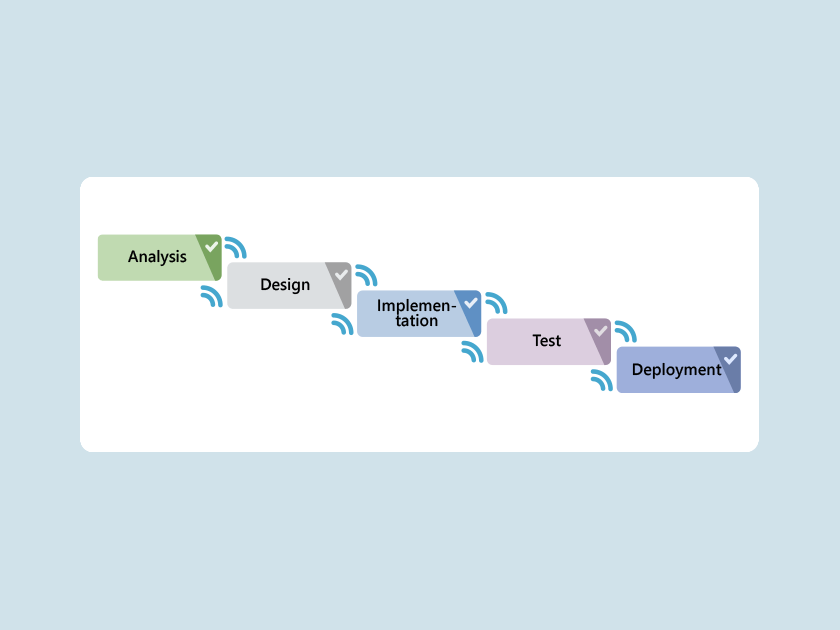
This is a clear explanation of traditional project management, including phases, milestones, and the Waterfall model, as well as a table of activities, artifacts, and outcomes.
What is Agile Project Management?
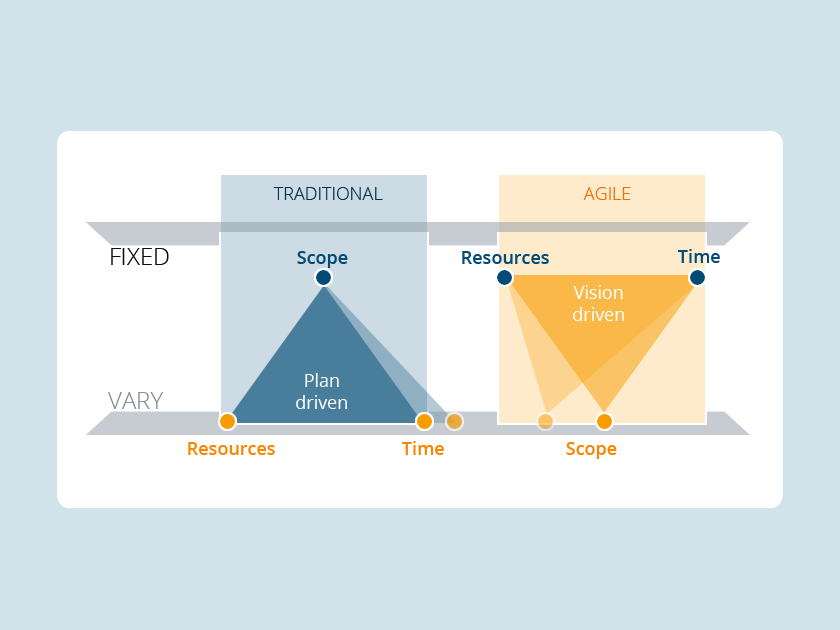
Agile Project Management Explained: An Overview of Values, Methods, and Benefits—Including a Comparison to Traditional Approaches
What is Project Management?
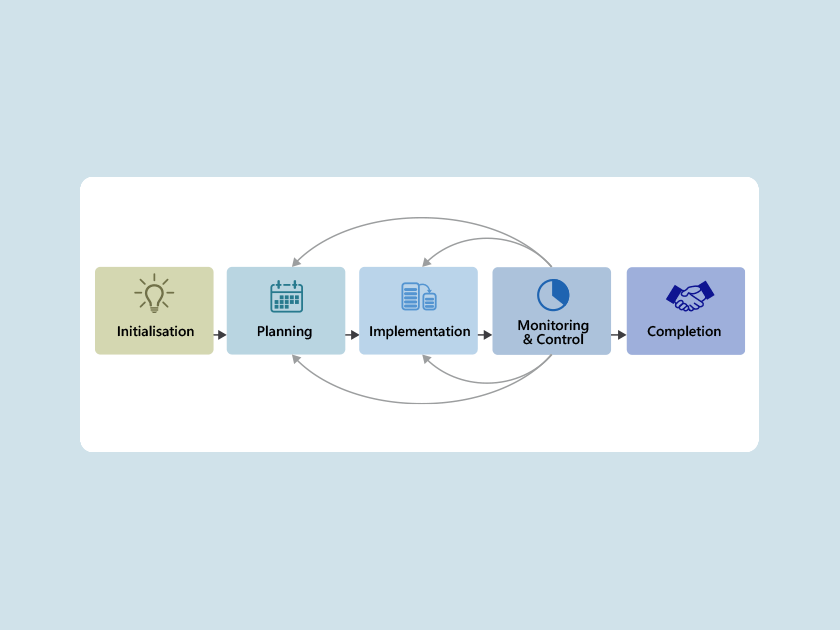
Project management provides structure, transparency, and planning certainty for complex projects. Using the right methods, clear processes, and centralized management, companies can balance time, budget, and quality, whether they use traditional, agile, or hybrid approaches.
objectiF RPM – Whitepaper
Increase your business agility. Get to know objectiF RPM in this whitepaper. From the needs of stakeholders to IT systems for successful business.
objectiF RM – Whitepaper
Requirements Engineering for Software and Systems. Read about benefits and options of objectiF RM in this whitepaper.