

Project Management involves the structured planning, execution, and monitoring of goal-oriented initiatives defined by time, budget, and resource constraints. The core objective is to deliver the desired outcome within these constraints while meeting the required quality standards.
The DNA of Every Project: The Magic Triangle
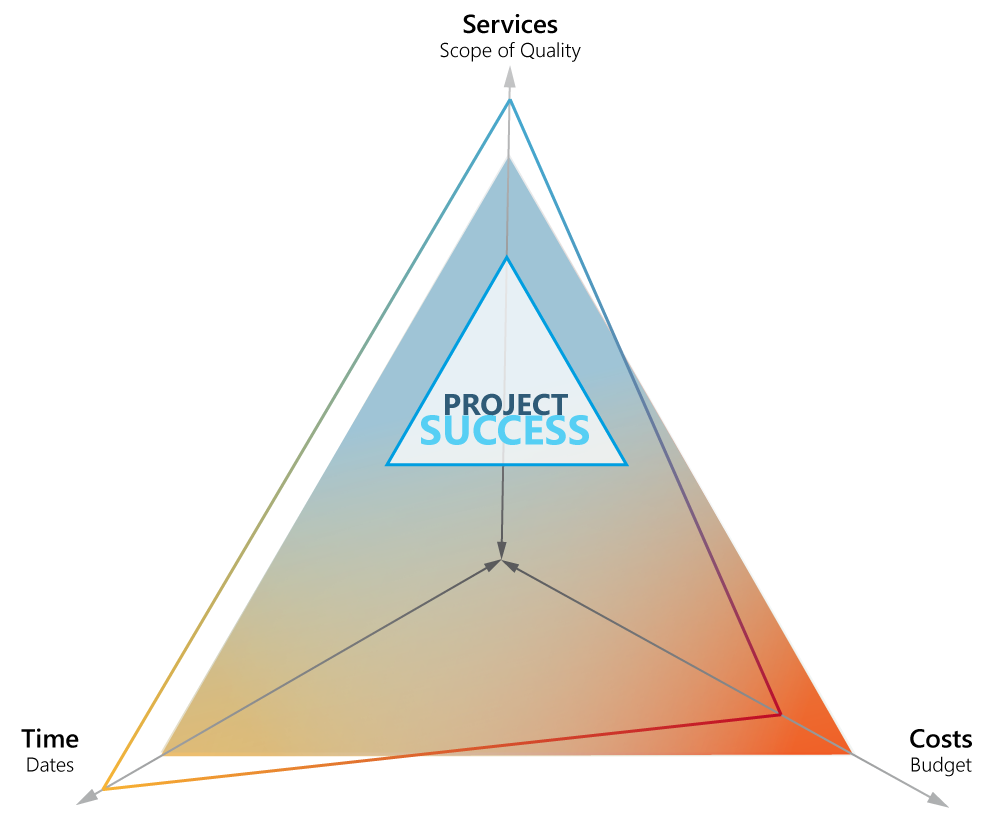
Every project – whether traditional or agile – is defined by three fundamental performance dimensions: time, cost, and scope/quality. These factors are tightly interconnected. A change in one dimension (for example, a budget reduction) inevitably requires adjustments in the others (such as reducing scope).
Understanding and actively managing these dependencies is essential for navigating project complexity with confidence.
Dimensions in Project Management: The Eye of Competence
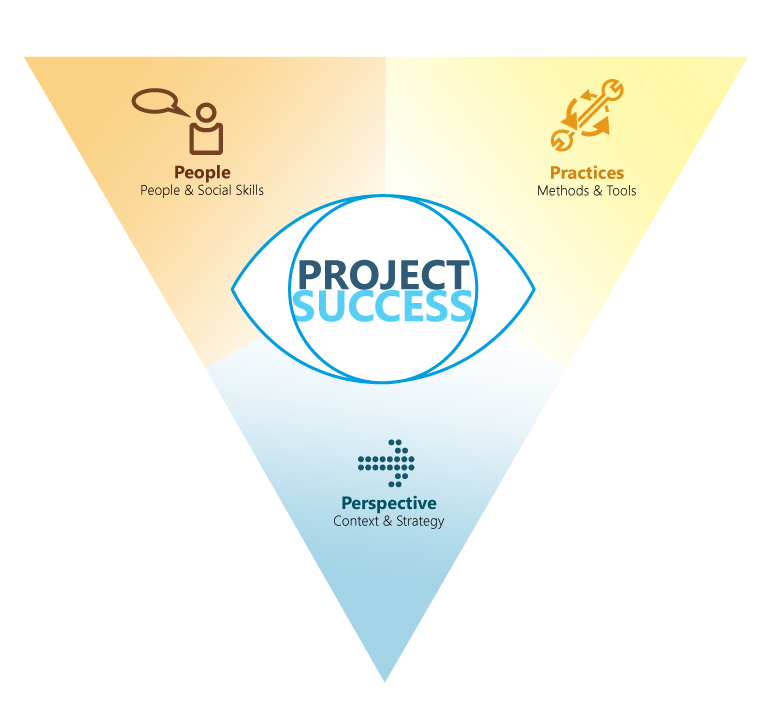
Project management involves much more than applying methods and tools. The International Project Management Association (IPMA) defines professional competence in its Individual Competence Baseline (ICB4). At the heart of this framework is the “Eye of Competence,” which connects three capability dimensions to ensure the success of projects as a whole.
Context Competence (Perspective)
This dimension addresses the “why” of the project and its organizational environment. Project managers must understand how the initiative contributes to strategic goals and delivers business value.
People Competence (People)
Projects are driven by and for people. This dimension includes leadership, communication, teamwork, negotiation, and conflict resolution, all of which are crucial for stakeholder engagement and team performance.
Practice Competence (Practice)
This dimension encompasses the classic project management toolkit, including the methods, processes, and technical skills necessary for effectively planning and controlling projects.
| Focus (what matters?) | Objective (what is achieved) | |
|---|---|---|
| Context (Perspective) | Strategy alignment, governance, compliance, power dynamics, organizational culture | The project is optimally embedded in its business environment, delivering strategic value. |
| People | Self-reflection, integrity, communication, leadership, teamwork, conflict resolution, negotiation | Effective collaboration and a motivating leadership culture are ensured |
| Practice | Project design, methods, tools, requirements, scope, scheduling, cost management, quality management, risk management, stakeholder engagement | The project is executed professionally and efficiently within defined constraints |
Why Professional Project Management Matters: Key Business Benefits
Professional project management is not an administrative luxury; it is a strategic necessity for organizations operating in dynamic markets. Consistent application delivers measurable advantages:
- Higher planning reliability: Structured approaches help identify risks early and create realistic schedules.
- Optimized resource utilization: Transparency prevents team overload and ensures focus on strategic priorities.
- Improved outcome quality: Defined quality standards and acceptance processes ensure that stakeholder expectations are met.
- Active risk mitigation: Systematic uncertainty management reduces the need for costly last-minute firefighting.
- Greater stakeholder satisfaction: Continuous communication keeps customers and sponsors aligned and informed.
- Sustainable knowledge growth: Lessons learned secure valuable experience for future initiatives (continuous improvement).
Management Levels in the Project Environment
There are four key concepts that define management in the context of an organization’s projects. These are project management, multiproject management, portfolio management, and program management. The following table compares these four levels of management:
| Short Definition | Focus & Objective | |
|---|---|---|
| Project management | Planning and controlling a single initiative | Doing the project right: achieving specific goals in time, cost, and quality |
| Multi-project management | Coordinating multiple projects within one organizational unit | Optimizing resources: avoiding conflicts and leveraging synergies |
| Program management | Managing a group of related projects with a shared overarching objective | Realizing benefits: achieving outcomes not possible through isolated project control |
| Portfolio management | Central governance of all projects and programs | Choosing the right projects: Strategic selection and prioritization of initiatives aligned with corporate strategy |
The Project Lifecycle (Phase Model)
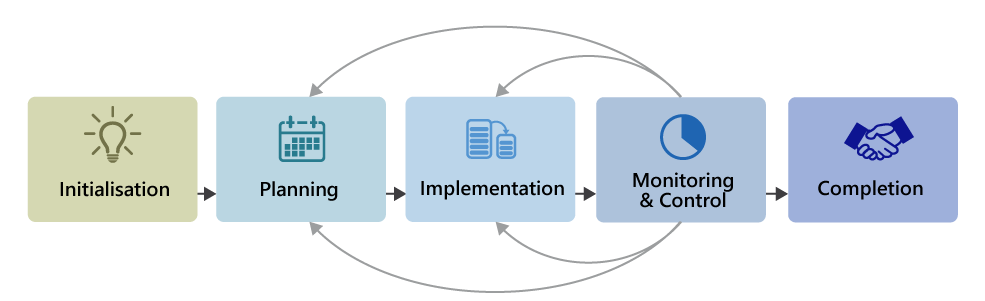
Projects are dynamic endeavors that follow a lifecycle. According to common standards, such as DIN 69901 or PMBOK, five phases are typically distinguished:
- Initiation: Define objectives and assess feasibility.
- Planning: Develop schedules, resource plans, and budgets.
- Execution: Coordinate tasks and facilitate team communication.
- Monitor and control: Perform variance analysis and manage risks.
- Closure: Final acceptance, lessons learned, and dissolution of the project organization.
Choosing the Right Approach
There Is No One-Size-Fits-All. Different project types require different management approaches.
- Traditional Project Management: This is ideal for initiatives with clearly defined goals and stable requirements, such as construction or infrastructure projects.
- Agile Project Management: Best suited for innovative environments with high uncertainty and evolving requirements (e.g., software development).
- Hybrid Project Management: Combines the best of both worlds with agile execution within a structured governance framework.
Why Software Makes the Difference – Avoiding the Complexity Trap
In theory, project management seems straightforward. In practice, however, many initiatives fail due to fragmented data landscapes. When schedules are stored in spreadsheets, tasks are scattered across emails, and requirements are scattered across documents, project leaders lose transparency. The result? Missed deadlines and budget overruns. Manual planning in spreadsheets, in particular, undermines planning reliability.
objectiF RPM restores planning confidence with its automated scheduling, but it is more than just a planning tool. It acts as an operating system for your projects. The key advantage is that the software is method-agnostic, so it will not lock you into a specific method or approach. It supports you by:
- Central Repository: All information – requirements, backlogs, schedules, and documents – is kept in one place.
- Integrated requirements engineering: Manage projects with direct visibility into content progress.
- Method flexibility: Use Gantt charts for long-term planning or Kanban boards and backlogs for agile teams.
- Real-time reporting: Dashboards instantly show if the Magic Triangle is balanced.

Lead with confidence – don’t just react!
See how objectiF RPM can synchronize your planning and execution, regardless of your chosen methodology.
FAQ
How does project management differ from operational work?
Project management involves temporary, unique, and complex initiatives, whereas operational work consists of repetitive, ongoing processes within an organization.
What are the key standards in project management?
In Germany, the DIN 69901 standard governs project management standards. This standard is further subdivided into DIN 69901-1 through DIN 69901-5, which cover fundamentals, processes and process models, methods, data and data models, and terminology.
ISO 21500 has a comparable scope at the international level.
Who are the stakeholders in project management?
Stakeholders are individuals or groups with a legitimate interest in or who are affected by the project (e.g., customers, sponsors, end users, and the project team).
What is a milestone?
A milestone marks an important event or the completion of a significant phase of a project. Milestones have a duration of zero and are used to track progress.
Want to Know More?
Explore more knowledge base articles online or download one of our whitepapers.
What is the Triple Constraint?
The triple constraint represents the three key success factors of a project: time, cost and scope. If one of these factors changes, it inevitably affects at least one of the other two. Project management therefore means continuously balancing these factors and addressing conflicting objectives at an early stage.
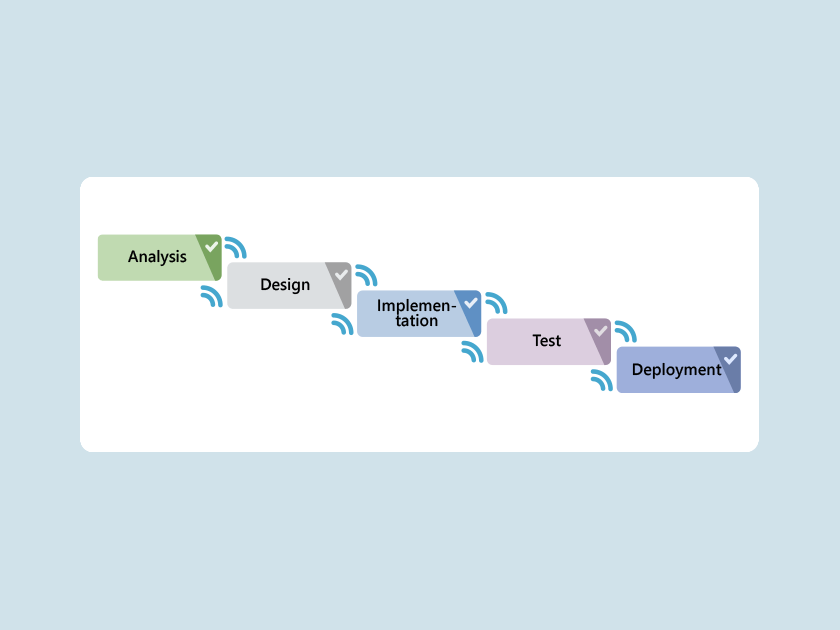
What is Traditional Project Management?
This is a clear explanation of traditional project management, including phases, milestones, and the Waterfall model, as well as a table of activities, artifacts, and outcomes.
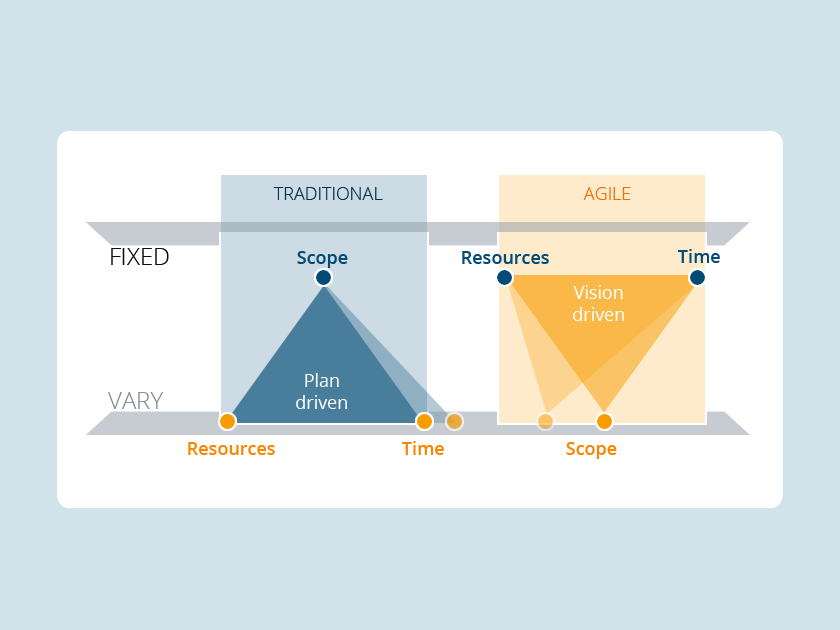
What is Agile Project Management?
Agile Project Management Explained: An Overview of Values, Methods, and Benefits—Including a Comparison to Traditional Approaches
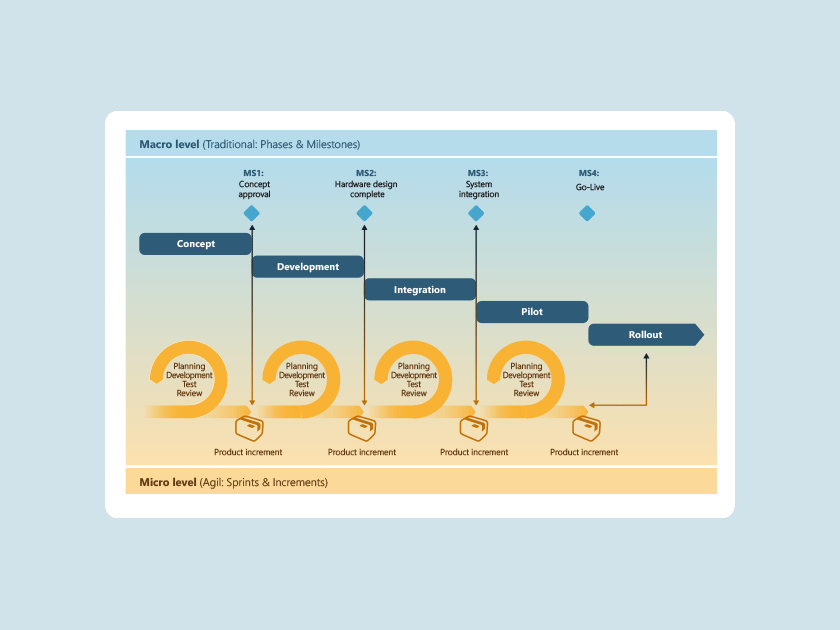
What is Hybrid Project Management?
Hybrid project management combines traditional planning with agile methods. This enables companies to maintain control over milestones, compliance and budgets while allowing teams to work flexibly and iteratively. With objectiF RPM, both approaches can be managed within a single, centralised platform.
objectiF RM – Whitepaper
Requirements Engineering for Software and Systems. Read about benefits and options of objectiF RM in this whitepaper.
objectiF RPM – Whitepaper
Increase your business agility. Get to know objectiF RPM in this whitepaper. From the needs of stakeholders to IT systems for successful business.