

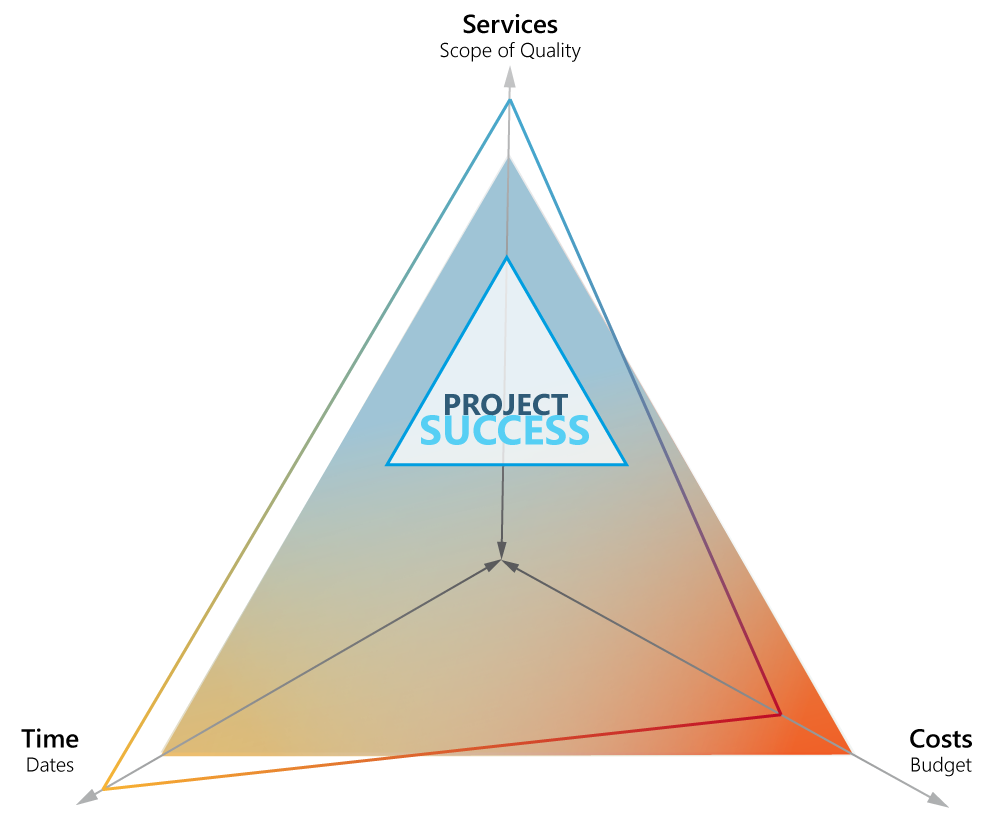
The Magic Triangle (also known as the Triple Constraint) illustrates the interdependence of the three most important factors for the success of a project: time (deadlines), cost (budget) and performance (content, scope and quality). The ‘magic’ lies in the fact that changing one of these factors inevitably affects the others.
Breaking Down the Triangle
| Focus (What is being measured?) | Typical conflict of objectives (The “counterforce”) | |
|---|---|---|
| Time | On-time delivery, project duration, achievement of milestones | Shortening the timeline (“moving up the deadline”) usually increases costs (overtime/additional staff) or reduces performance |
| Cost | Budget compliance, resource consumption, personnel costs | A budget cut (“cost-cutting measures”) almost always results in a longer timeline (time) or the elimination of planned features (performance) |
| Scope | Functionality, Requirements, Quality of Results | Without adjustments, additional requirements (scope creep) will immediately cause the schedule to fall behind (time) or require a larger budget (costs) |
Successful project management requires planning and executing projects in a way that ensures costs are not exceeded, deadlines are met, and the final product meets the required performance standards (content, scope, and quality) – even when changes arise. Project managers must constantly balance cost, time, and performance. In practice, this means: If a client requests additional features shortly before release (performance increases), the deadline must be postponed (time increases) or the team must be expanded (costs increase).
The Magic Triangle illustrates these three factors:
- Costs: Refer to the originally set budget, as well as the planned and actual costs. These result from resource planning (staff, materials, rent, etc.).
- Time: Represents project deadlines such as start and end dates, releases, sprints, and milestones. A Gantt chart is often used for this purpose.
- Performance: It describes the intended content, scope, and quality of the project (e.g., software features). If the scope increases gradually, it is referred to as “scope creep.”
The Magic Triangle in Classic and Agile Project Management
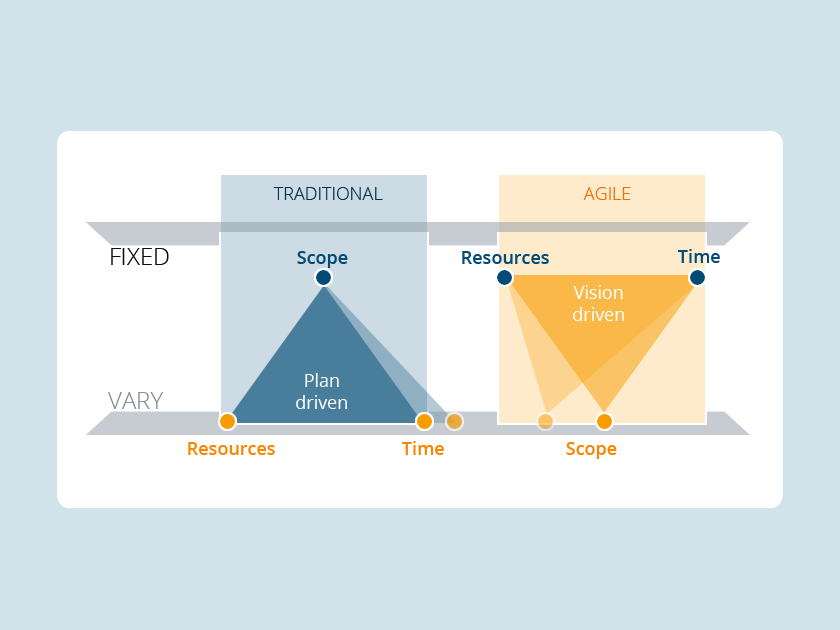
Sometimes, the triangle is visualized upside down. This illustrates the difference between traditional and agile project management. In traditional project management, the scope is often fixed, while the time and costs are variable. In agile project management, however, the time and costs (sprints/teams) are often fixed, while the scope remains variable.
Evolution to the Devil’s Square
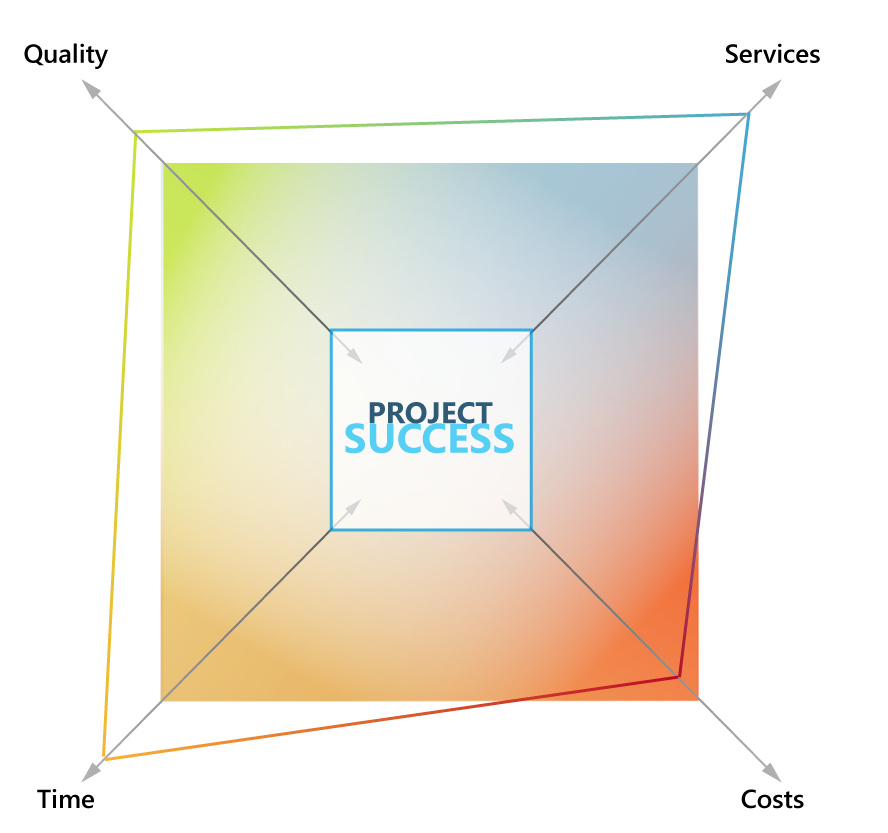
The Devil’s Square, also known as the Magic Square, builds on the classic Magic Triangle. It describes four dimensions, which are represented by the corners of a square:
- Time (deadlines): The project duration or completion date
- Costs (budget): The available financial and human resources
- Scope: The project’s main objectives and the scope of the deliverables
- Quality: The nature and quality of the project results
Why is it called “Devil’s Square”?
Changing one dimension affects at least one of the other three. Conflicts of interest are therefore inevitable.
For example, if you try to speed up a project (less time), you must expect rising costs (such as through the use of more staff), reduced scope or lower quality.
If you try to optimise all four dimensions, unforeseen events can lead to ‘devilish‘ problems, such as an unrecognised loss of quality.
Project Management Instead of Crisis Management
The interdependencies of the Magic Triangle are often not recognized in manual lists or standalone Gantt charts until it is too late. A change in scope (performance) does not immediately reveal its impact on the budget (costs) or deadline (time).
objectiF RPM is our solution for project management, requirements engineering, and software development. It provides support for managing costs, time, and performance:
- Integrated planning: In objectiF RPM, requirements, deadlines, and resources are linked within a single data model. Use Gantt charts to create schedules, plan staff assignments, and monitor costs directly within the tool.
- Transparency and communication: Clear, status-based processes for requirements and documents, as well as automated notifications for changes, ensure that all stakeholders are kept informed.
- Quality Assurance: Use the integrated test management feature to plan and conduct reviews and ensure that the “performance/quality” factor is secured quantitatively and qualitatively.
With objectiF RPM, you can make data-driven decisions instead of merely reacting to crises.

Full Transparency Regarding Costs, Time, and Performance
Maintain a balance of costs, time, and performance at all times. With objectiF RPM, you can manage projects transparently, integrate them, and make them traceable.
FAQ
Why is it called "Magic" Triangle?
The “magic” lies in the balance. It’s impossible to optimize all three factors simultaneously (e.g., achieving the highest quality in the shortest amount of time at the lowest price) or to alter one dimension without affecting the others. The triangle makes these invisible forces visible.
What is the difference between the Magic Triangle and the Devil's Square?
In the classic triangle, quality is part of performance. However, in the Devil’s Square, quality is separated out as a fourth dimension to protect its status as an independent goal.
Why is manually adjusting the triangle (e.g., in Excel) risky?
Static tables lack dynamic links. For instance, if you change a delivery date, the budget does not automatically adjust. These inconsistencies often go unnoticed until a target has already been missed.
How does software help ensure quality (the Devil's Square)?
Professional tools like objectiF RPM integrate quality and test management directly into the planning process. Test cases and reviews are defined as integral parts of the workflow, ensuring quality is managed in a measurable way and is not merely a “byproduct.”
Want to Know More?
Explore more knowledge base articles online or download one of our whitepapers.
What is Agile Project Management?
Agile Project Management Explained: An Overview of Values, Methods, and Benefits—Including a Comparison to Traditional Approaches
What is Traditional Project Management?
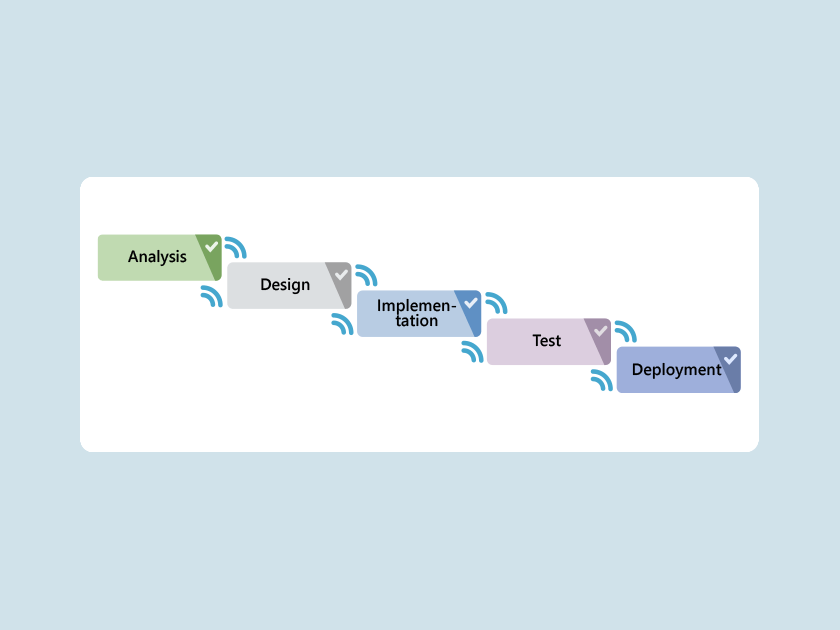
This is a clear explanation of traditional project management, including phases, milestones, and the Waterfall model, as well as a table of activities, artifacts, and outcomes.
What is Project Management?
Project management provides structure, transparency, and planning certainty for complex projects. Using the right methods, clear processes, and centralized management, companies can balance time, budget, and quality, whether they use traditional, agile, or hybrid approaches.