
According to the International Requirements Engineering Board (IREB), Requirements Management (RM) is designed to keep requirements consistent, traceable, and controllable throughout their entire lifecycle. RM includes the systematic capture, versioning, and maintenance of requirements. The IREB defines RM as one of the four core activities of requirements engineering.
Requirements Engineering vs. Requirements Management
In everyday practice, “Requirements Engineering” (RE) and “Requirements Management” (RM) are often used interchangeably. According to the leading IREB standard, however, this is imprecise.
- Requirements Engineering (the big picture): The discipline that ensures requirements are elicited, documented, validated, and managed.
- Requirements Management (a subset): The “infrastructure work” behind the content. Requirements management ensures that requirements remain findable, changeable, and traceable through implementation.
Put simply: Requirements engineering defines the content (“What do we need?”), while requirements management provides the order (“Where is it documented, and which version is current?”).
Core Tasks of Requirements Management according to CPRE
Requirements management does not begin after the specification phase; it accompanies the development process from the initial idea. Key responsibilities include:
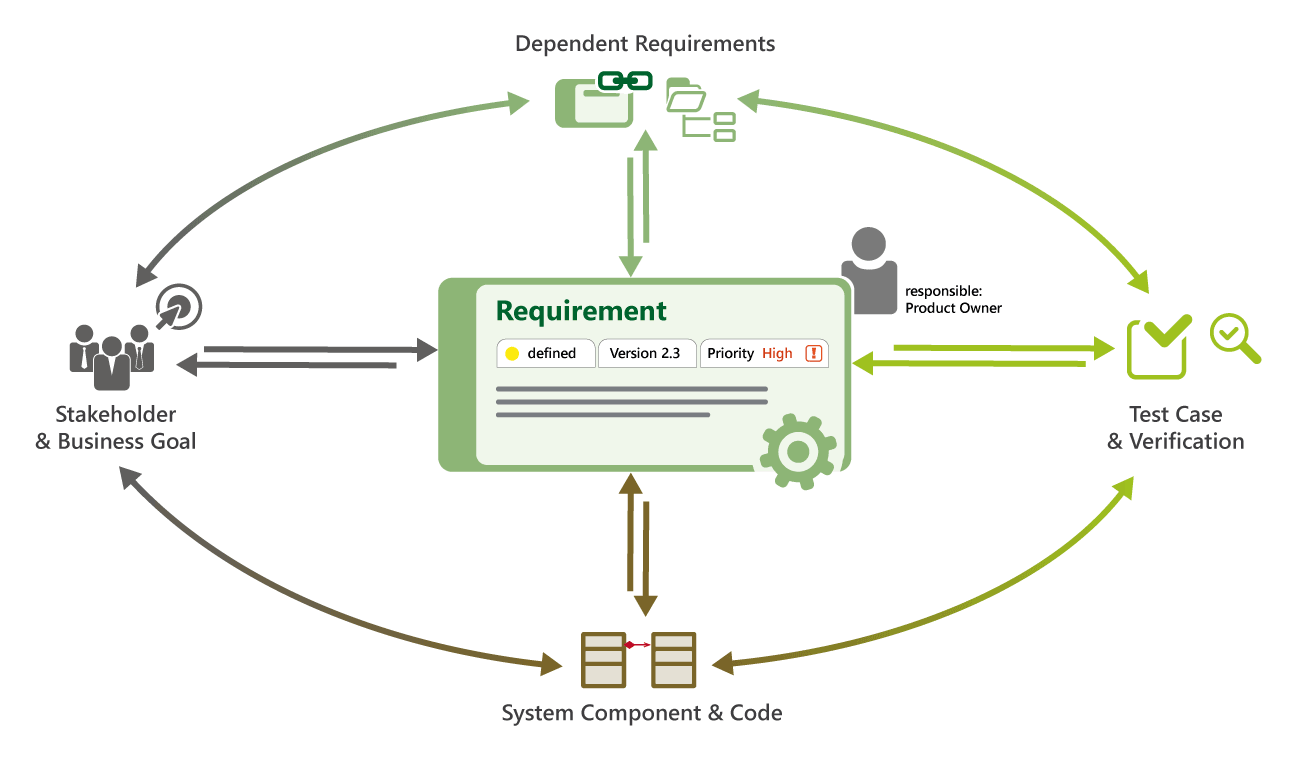
- Attribute and view management: Assign attributes such as status (e.g., “under review,” “approved”), priority, or source to each requirement to enable filtering and control for specific stakeholders (e.g., “Show only safety-critical requirements”).
- Traceability: Establish and maintain relationships between requirements, test cases, and architecture elements.
- Versioning & Configuration management: Ensures that it is always clear which version of a requirement is current and what changes have been made. Freeze defined states (Baseline) for releases or milestones.
- Change Management: Implement a defined process to evaluate, prioritize, and control change requests.
- Reporting & Monitoring: Provide transparency on requirement maturity and implementation status for project management.
Why the Distinction Matters
Teams that focus solely on management may administer requirements perfectly, but those requirements may be fundamentally wrong. Conversely, teams that focus only on “engineering” may generate brilliant ideas, but they lose control as changes accumulate. Successful projects require both creative requirements engineering (RE) and disciplined requirements management (RM).
Requirements Management in Practice
Many teams excel at requirements development but struggle with management. Word tables and Excel spreadsheets quickly become unwieldy, and traceability is easily lost. When changes occur, it is unclear which architectural elements are affected.
To help you focus on value creation, objectiF RM and objectiF RPM handle the administrative tasks of requirements management:
- Complete history: Every change to a requirement is automatically logged (who, when, and what).
- Automated traceability: dependencies are visualized in real time. When a requirement changes, impact analysis immediately shows which requirements, test cases, and architecture elements are affected.
- Baselines at the Push of a Button: Create immutable reference states (e.g., for contract negotiations) and compare them later with the current state.
- Status workflows: Define enforced state transitions (e.g., “In Progress” → “In Review” → “Approved”).
- Single Source of Truth: Instead of scattered documents, the tool provides one central, authoritative repository for all stakeholders.
The result is clear. Requirements management evolves from an administrative burden into a strategic success factor.

Tools for professional Requirements Management & Requirements Engineering
Use objectiF RM and objectiF RPM to document and structure your requirements as a true Single Source of Truth.
FAQ
When does Requirements Management begin?
The RM process begins alongside the initial requirements elicitation and concludes when the system is retired.
Is RM only important for waterfall projects?
No, especially in Agile projects. Professional RM (e.g., backlog management) is crucial for maintaining an overview of the system or product being developed and its evolution.
What is a baseline in Requirements Management?
A baseline is a snapshot of development results at a specific point in time. It serves as a stable reference point for future development and can usually only be modified through a formal change request process.
Want to Know More?
Explore more knowledge base articles online or download one of our whitepapers.
What is Requirements Engineering?
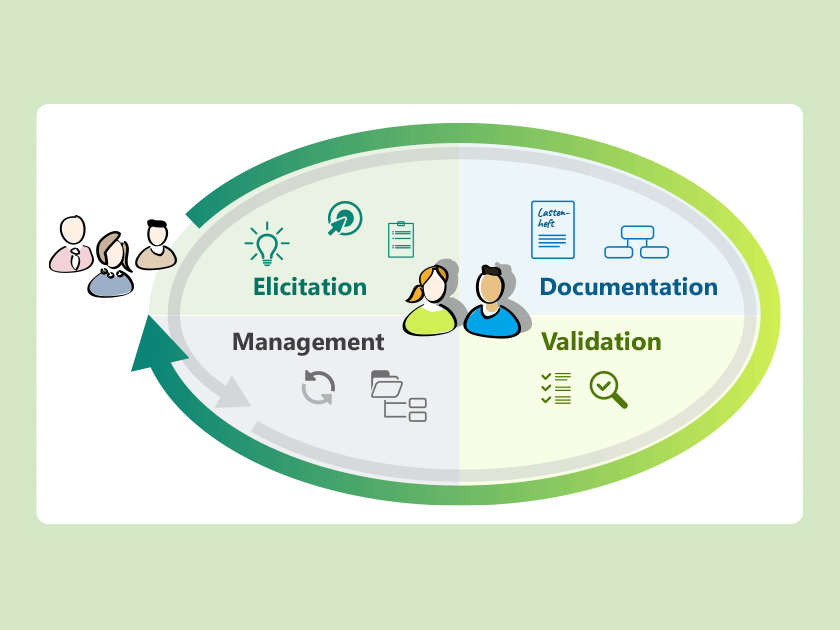
Requirements engineering (RE) involves eliciting, documenting, validating, and managing requirements. Learn how professional RE can safeguard your projects.

What is Requirements Modeling?
Learn about requirements modeling according to the IREB standard, including UML diagrams and modeling views, as well as the CPRE Advanced Level.
What is CPRE?
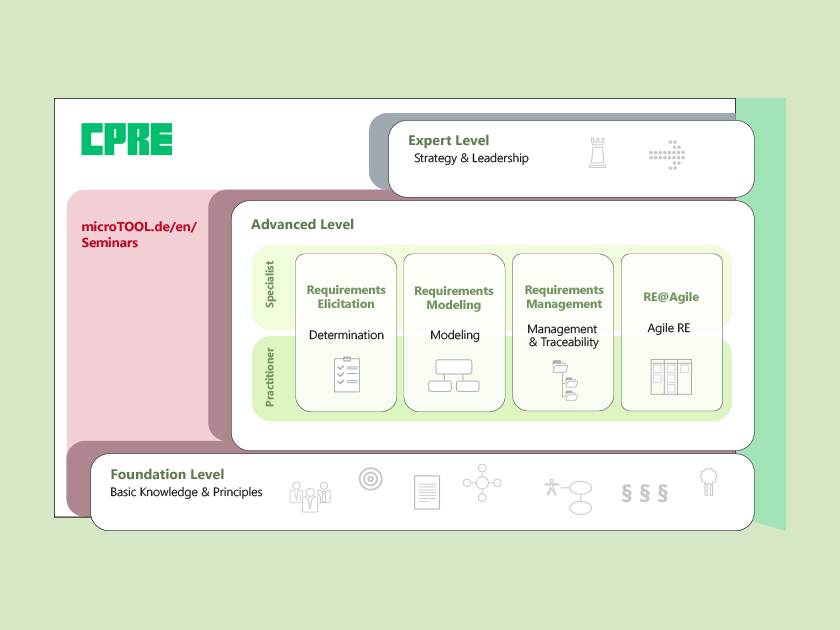
The CPRE (Certified Professional for Requirements Engineering) is the international standard for RE certification. Find information on the program’s content, levels, and exams.
objectiF RM – Whitepaper
Requirements Engineering for Software and Systems. Read about benefits and options of objectiF RM in this whitepaper.

objectiF RPM – Whitepaper
Increase your business agility. Get to know objectiF RPM in this whitepaper. From the needs of stakeholders to IT systems for successful business.