
Requirements Engineering (RE) is a systematic and disciplined approach to developing system requirements. RE encompasses four core activities: elicitation, documentation, validation, and management of requirements. These activities are all aimed at ensuring the developed system meets stakeholder needs.
Requirements Engineering is far more than writing specification documents. It is a continuous process that minimizes the risk of misdevelopment and ensures that all stakeholders share a common understanding of the problem and the solution before costly development begins. According to the International Requirements Engineering Board (IREB) standard and the Certified Professional for Requirements Engineering (CPRE) syllabus, RE forms the foundation of every successful software and systems development project.
The Requirements Engineering Process
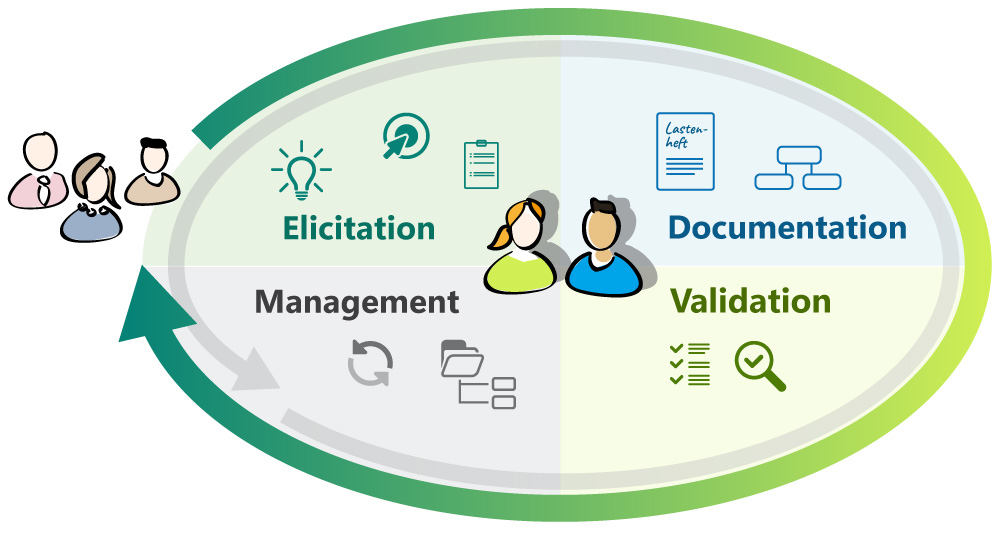
The 4 Core Activities of Requirements Engineering
- Elicitation: Actively gathering requirements using techniques such as interviews, workshops, and observations.
- Dokumentation: Capturing requirements in natural language (e.g., User Stories or specification documents) or models (e.g., UML/SysML), to ensure permanent availability.
- Validation & Negotiation: Ensuring the quality of requirements (are they correct, unambiguous, complete, consistent, and testable?) and resolving conflicts between stakeholders.
- Management: Controlling changes, change management, prioritization, and Traceability across the entire lifecycle.
Requirements Engineering vs. Requirements Management
| Requirements Engineering (RE) | Requirements Management (RM) | |
|---|---|---|
| Focus | Content & Definition: development of the functional solution | Administration & control: governance of requirements |
| Key questions | “What does the stakeholder need?” “Is the requirement correct?” |
“Which version is current?” “Who changed what?” |
| Core activities | Elicitation, analysis, specification, validation | Traceability, versioning, change management, prioritization |
| Timing | Strong focus on early concept phase (iterative) | Continuously accompanies the project through release and beyond |
| Goal | A complete, consistent, and approved specification | Seamless documentation of the evolution of each requirement |
Professional Requirements Engineering in Practice
In many organizations, requirements are still created using Word and Excel. This leads to a high manual maintenance effort, outdated versions, and missing traceability when changes occur. The link between requirements, tests, and risks is lost.
Professional requirements engineering requires professional tools. With objectiF RM and objectiF RPM, you can capture requirements in a structured way, model relationships visually, and generate documents. Results are securely managed behind the scenes:
- Get traceability at the push of a button: Instantly see which tests are affected by a change.
- Versioning/history: Every change is logged in an audit-proof manner.

Professional Requirements Engineering Tools
Enjoy end-to-end traceability of your requirements with professional support from objectiF RPM.
FAQ
Why is Requirements Engineering important?
Studies show that defects in requirements are the most costly errors in software and systems development. RE prevents cost explosions by clarifying requirements early on.
What is the difference between Requirements Engineering and Business Analysis?
Business analysis often focuses on a company’s business goals and processes, while requirements engineering emphasizes the technical and functional requirements of a system to be developed. However, the boundaries between these two disciplines are fluid.
What is CPRE?
CPRE stands for Certified Professional in Requirements Engineering. It is the standard qualification for RE. Read our detailed article here: What is CPRE?
Want to Know More?
Explore more knowledge base articles online or download one of our whitepapers.

objectiF RM – Whitepaper
Requirements Engineering for Software and Systems. Read about benefits and options of objectiF RM in this whitepaper.

objectiF RPM – Whitepaper
Increase your business agility. Get to know objectiF RPM in this whitepaper. From the needs of stakeholders to IT systems for successful business.
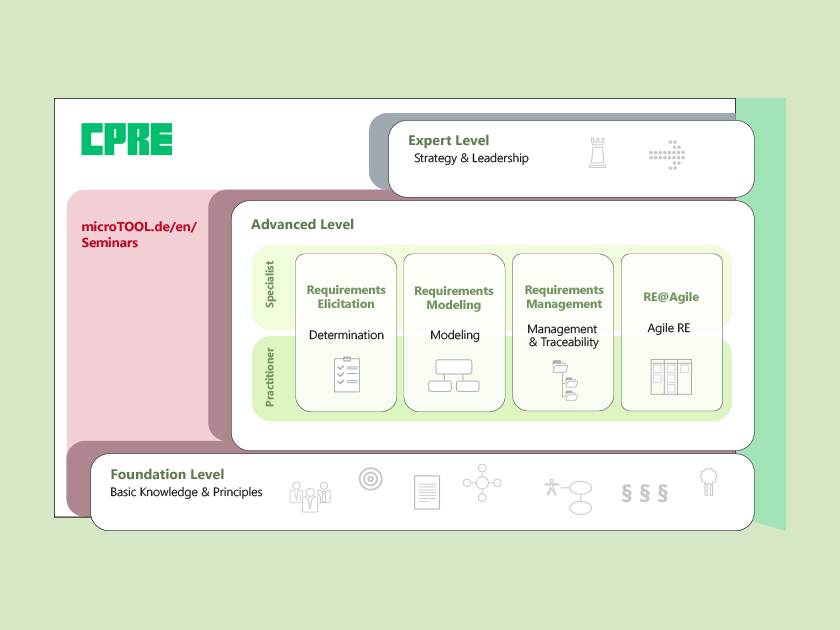
What is CPRE?
The CPRE (Certified Professional for Requirements Engineering) is the international standard for RE certification. Find information on the program’s content, levels, and exams.