

Transitioning from Business Capabilities to an Actionable Project Structure
Webinar Content
Many digital transformation projects start with long lists of requirements, but fail to clarify what the company needs to be able to do from a business perspective first. This webinar presents an alternative approach in which business capabilities are structured and defined in concrete terms through information objects, then linked to business processes, use cases and implementation planning. This approach generates requirements with clear, traceable justifications and prevents functions from the legacy system or individual requests from being transferred to the new solution without proper review.
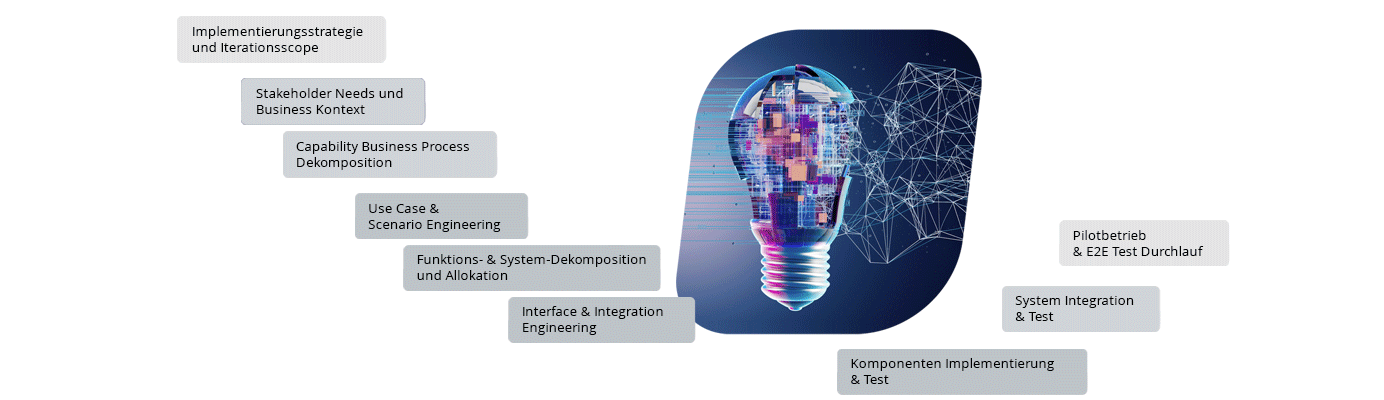
After providing a brief overview of the Solution Architecture Process Framework, the webinar will focus on the modular process component ‘Capability & Business Process Decomposition’. This component translates business requirements into capability structures, activities, and information flows, providing crucial input for further system and implementation planning.
A hands-on demonstration using microTOOL objectiF RPM shows how capability maps can be modelled and evaluated. As the underlying process description is included in the tool template, the integrated AI can derive a project-specific work breakdown structure from it. This transforms a business architecture into a concrete, traceable project structure.
What You Get
Overview and Introduction
- A concise Introduction to Solution Architecture
- Business capability mapping and
capability decomposition - Linking capabilities through information inputs and outputs
Live Demonstration
- Analysis of business dependencies in objectiF RPM
- AI-powered derivation of a work breakdown structure
- Seamless transition from business requirements to implementation planning
Technical Implementation
This webinar will be conducted via Microsoft Teams. You will receive a link to the session in advance.
Who Benefits the Most from This Webinar?
This webinar is for project managers, systems analysts, systems architects, requirements engineers , and anyone interested in objectiF RM and RPM.