

The IREB has defined nine fundamental guidelines known as the Principles of Requirements Engineering. These principles serve as universal guardrails for project success, defining the mindset and professional discipline necessary to create real business value through requirements engineering, regardless of the work environment.
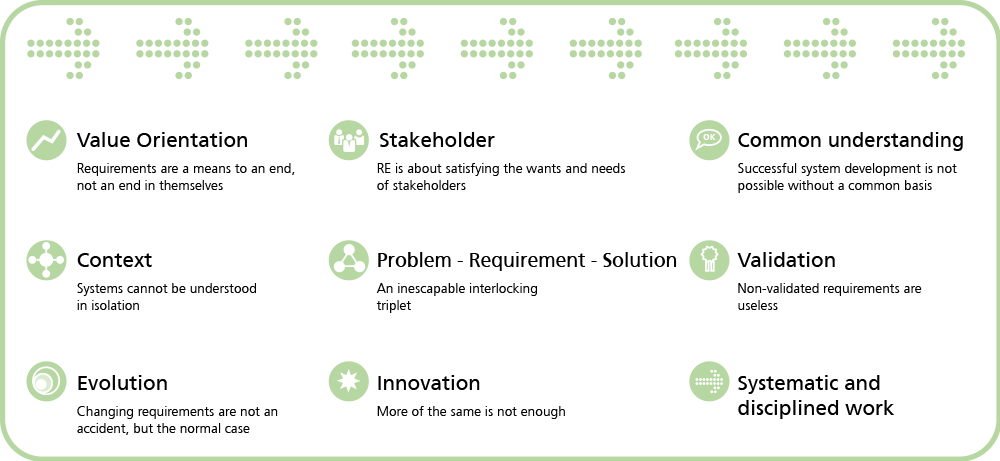
The 9 Principles of Requirements Engineering
Success in Requirements Engineering hinges on consistently applying these nine core principles. The following is a detailed overview based on the current CPRE standard:
Principle 1: Value Orientation
Requirements are a means to an end, not an end in themselves.
The value of a requirement is equal to its benefit minus the total cost of elicitation, documentation, and management. Requirements engineering focuses on value creation, a concept that agile frameworks such as Scrum reinforce through short feedback cycles.
Principle 2: Stakeholders
Requirements engineering is about satisfying Stakeholders needs. Core activities include identifying, managing and analyzing Stakeholders (Stakeholder Analysis). Personas are often used to represent unknown user groups. The key is to ensure that no stakeholder is overlooked, conflicts are resolved early on, and feedback is gathered regularly. This allows teams to detect and correct misalignment early on.
Principle 3: Common Understanding
Successful development requires a shared foundation. IREB distinguishes between explicit understanding, which is based on documented and agreed-upon requirements, and implicit understanding, based on shared knowledge. Glossaries, reference systems, and prototypes help establish this understanding across team boundaries.
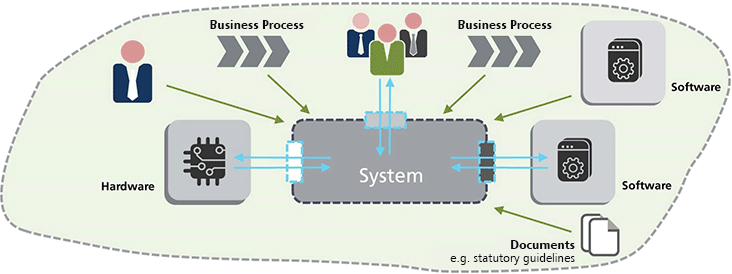
Principle 4: Context
Systems cannot be understood in isolation. To correctly specify a system, the System Context must first be defined. This is crucial for defining and understanding requirements. Systems interact with their environment, for example, via interfaces. The system boundary defines the scope of the system under development and prevents uncontrolled growth of requirements (Scope Creep). Since system boundaries may shift during a project, requirements engineering must detect such changes and adjust the requirements accordingly.
Principle 5: Problem – Requirement – Solution
These three aspects are closely intertwined. Traditionally, requirements are derived from stakeholder problems and form the basis for developing a solution to those problems. In innovation contexts, however, this sequence often does not apply. Solutions frequently emerge through experimentation. Nevertheless, requirements engineers should strive to methodically separate problems, requirements, and solutions in their thinking, communication, and documentation.
Principle 6: Validation
Unvalidated requirements are useless. Validation against stakeholder needs must begin early in the requirements engineering process. Key questions include: Do stakeholders agree on the requirements? Are stakeholder needs and expectations fully covered? Are the assumptions about the context correct and reasonable? Techniques such as inspections, reviews, walkthroughs, and creating a Minimal Viable Product (MVP) are essential.
Principle 7: Evolution
Change is not an accident – it is the norm. Typical drivers of change include shifting business processes, market shifts, technological advances, new regulations and laws, changing stakeholder priorities and expectations, and feedback loops. Requirements engineers must continuously balance stable requirements with value-creating flexibility (see Requirements Management).
Principle 8: Innovation
More of the same is not enough. The goal is to delight stakeholders, not just satisfy them. The Kano Model illustrates this relationship. For requirements engineering, this means actively seeking exciting new features at the incremental level and disruptive ideas at the strategic level. Techniques such as design thinking help translate disruptive ideas into actionable requirements.
Principle 9: Systematic and Disciplined Work
A systematic and disciplined approach to Requirements Engineering improves the quality of the system being developed. However, this does not mean that there is only one correct process for requirements engineering (RE). Requirements engineers must always tailor their approach, practices, and deliverables to the specific problem and environment.
Principle vs. Method
From Principles to Practice
Although principles such as common understanding and evolution of requirements sound compelling in theory, they often break down in reality due to siloed knowledge, scattered documents, and fear of change. Without the proper tools, these principles often remain mere lip service.
objectiF RM and objectiF RPM are designed to do more than just manage methods; they are also designed to technically enable the underlying principles. For example:
- The Context principle is supported through integrated system context diagrams.
- Common understanding is strengthened through a central repository for all RE artifacts.
- Evolution becomes manageable through versioning and baselining.
- Value Orientation is ensured by linking requirements to business goals.

Put Principles into Action
With objectiF RM and objectiF RPM, you can anchor the core RE principles directly in your project and turn good intentions into reliable results.
FAQ
Why are principles more important than methods?
Methods may vary. However, principles, such as value orientation, remain constant and ensure quality across all development approaches.
Where do these principles originate?
They are a core component of the IREB CPRE Foundation Level curriculum.
Are these principles relevant for agile environments?
Yes, absolutely. Principles such as “value orientation” and “evolution” lie at the heart of Agile. IREB has formulated these principles so that they apply equally to Scrum, Kanban, and Waterfall.
How do the principles relate to the Kano Model?
The concept of “innovation” necessitates thinking beyond fundamental factors and identifying excitement factors (Kano Model).
Want to Know More?
Explore more knowledge base articles online or download one of our whitepapers.
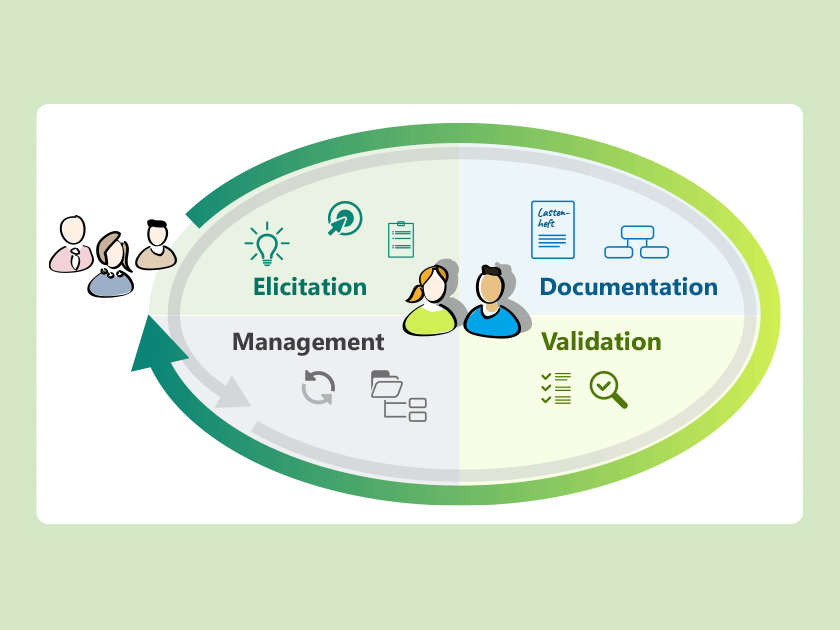
What is Requirements Engineering?
Requirements engineering (RE) involves eliciting, documenting, validating, and managing requirements. Learn how professional RE can safeguard your projects.
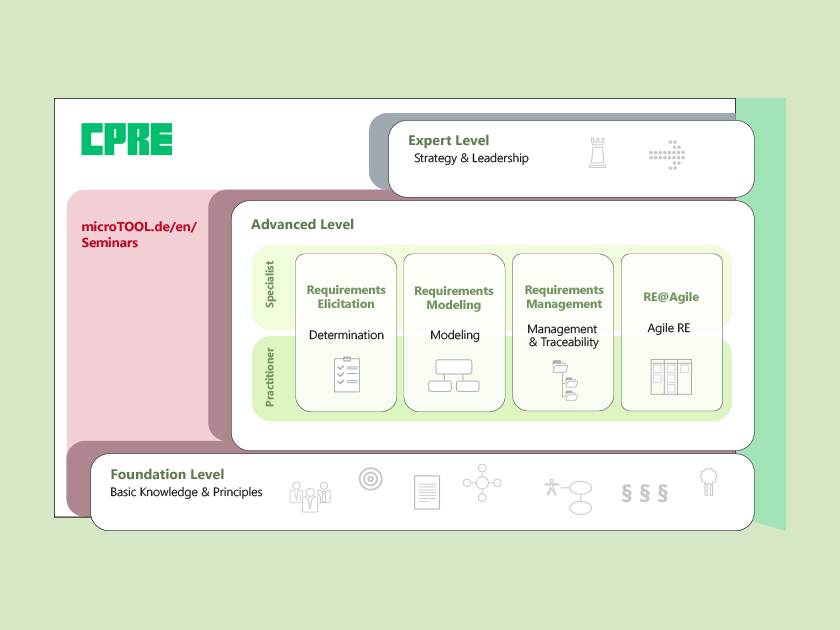
What is CPRE?
The CPRE (Certified Professional for Requirements Engineering) is the international standard for RE certification. Find information on the program’s content, levels, and exams.
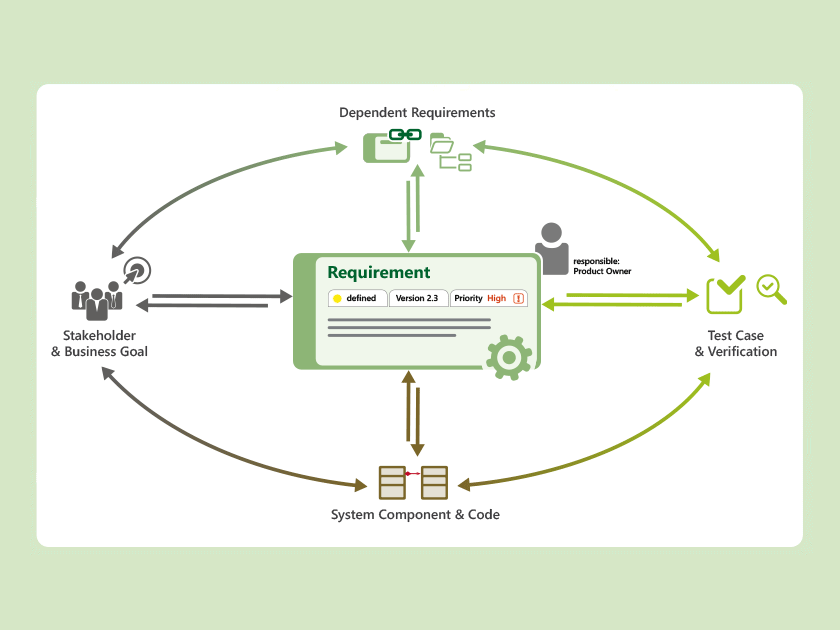
What is Requirements Management?
Requirements management (RM) involves managing requirements throughout their lifecycle. Learn how RM differs from requirements engineering and how tools can assist with the process.
objectiF RM – Whitepaper
Requirements Engineering for Software and Systems. Read about benefits and options of objectiF RM in this whitepaper.

objectiF RPM – Whitepaper
Increase your business agility. Get to know objectiF RPM in this whitepaper. From the needs of stakeholders to IT systems for successful business.