

Quality management (QM) involves planning, controlling and improving processes and products to meet defined requirements. Rather than simply testing for quality, the goal is to systematically ensure it through preventive methods such as reviews and inspections, and optimised workflows.
The Two Pillars: Quality Assurance and Quality Control
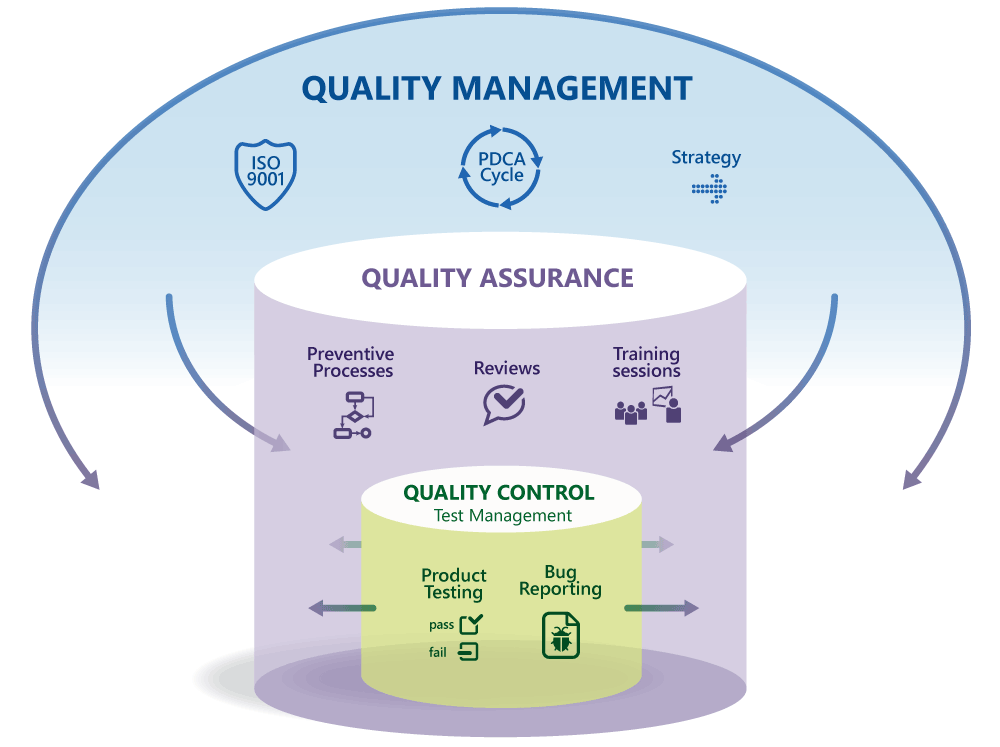
To understand QM, one must distinguish between two concepts:
1. Quality Assurance (QA):
Proactive and process-oriented. The goal is to prevent errors from occurring, for example through training, standards and reviews.
2. Quality Control (QC):
Reactive and product-oriented. The objective is to pinpoint existing defects (e.g., through software testing).
An effective quality management system combines the following two approaches: “Do the right things“ (QA) and “do things right“ (QC). It follows the Plan-Do-Check-Act cycle (PDCA) cycle to continuously optimize processes.
Preventive Measures: Reviews and Inspections
Quality management begins with the documents before a single test case is executed. Static testing techniques are the most efficient form of quality assurance:
- Review: This involves a technical discussion of documents, such as requirements, specifications, and architecture, to resolve discrepancies early on.
- Inspection: The most formal type of review with defined roles (facilitator and note-taker). During this process, the document is thoroughly reviewed against checklists. The dual-control principle is often applied as a preventive control measure here, whereby critical decisions, documents, or processes must be reviewed by a second, independent person.
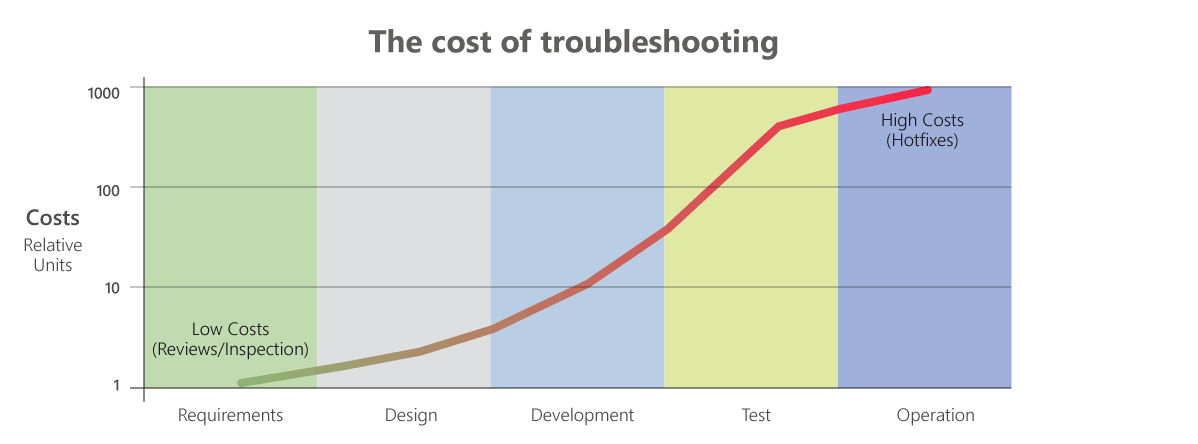
Studies show: An error found during the review of a requirement costs only a fraction of what it would cost to fix after programming.
Bureaucracy Is the Result of Poor Quality Management.
In many companies, quality management only exists on paper (or in endless Excel spreadsheets). In reality, requirements are in Word, risks are in Excel, and test results are in a third-party system.
- This creates a documentation gap: When a requirement changes, no one can be sure if the review document has been updated.
- The audit stress: Shortly before certification (e.g., ISO 9001), employees must spend days gathering and consolidating documents manually to prove who changed and reviewed what and when.
- Lack of accountability: Reviews often take place via email with responses like “Looks good,” but this status is not attached to the document in an audit-proof manner.
The Solution: Quality Management as a Living Process
A QM system is only as good as its integration into daily work, and objectiF RPM objectiF RPM ends the separation of work and documentation. Quality is created “on the fly” here, not retrospectively.
- Practical Review Workflows: Define fixed, state-driven review processes for requirements, use cases, documents, and entire groups of items. Invite stakeholders to review items online with a single click. Conducting a review only requires a web browser, which is a real advantage for distributed teams. A review is considered successfully completed when all reviewers “accept” the item under review.
- Automated Traceability: objectiF RPM provides a list of what was reviewed, when it was reviewed, and the result. For example, it provides a list of all requirements along with their associated reviews and current statuses.
- Audit Assurance: Thanks to comprehensive versioning and version history, you can confidently face any auditor.

Audit-Ready without the Paperwork Hassle
objectiF RPM integrates quality assurance into your processes. Transparent, traceable, and verifiable at any time.
FAQ
Why is testing not enough on its own?
Testing only detects bugs after they have been introduced. Quality assurance, through code reviews, prevents bugs from entering the code in the first place. This saves time and money.
Is quality management necessary for agile projects, such as Scrum?
Absolutely. Scrum practices such as the “Definition of Done” (DoD) and the Sprint Review fulfill important quality management functions.
What role does risk management play in quality management?
A central one. Since it is impossible to test everything 100% of the time, risk-based quality management helps set priorities. For example, critical functions (e.g., brake control) undergo more reviews and tests than non-critical functions (e.g., the color of the GUI). Methods such as FMEA (failure mode and effects analysis) are standard practice.
What is Total Quality Management (TQM)?
TQM is a philosophy that quality is the responsibility of every employee, from the doorman to the CEO, not just a single department (Quality Assurance). The goal is to continuously improve all company processes to achieve maximum customer satisfaction.
What is the difference between verification and validation?
This is the “crucial question” in quality management.
Verification asks: “Are we building the product correctly?” Does it meet the specifications/requirements?
Validation asks, “Are we building the right product?” Does it solve the customer’s problem in real-world use? A product can be perfectly verified (flawless according to the plan), yet still be invalid (useless to the user).
Want to Know More?
Explore more knowledge base articles online or download one of our whitepapers.
objectiF RM – Whitepaper
Requirements Engineering for Software and Systems. Read about benefits and options of objectiF RM in this whitepaper.
objectiF RPM – Whitepaper
Increase your business agility. Get to know objectiF RPM in this whitepaper. From the needs of stakeholders to IT systems for successful business.
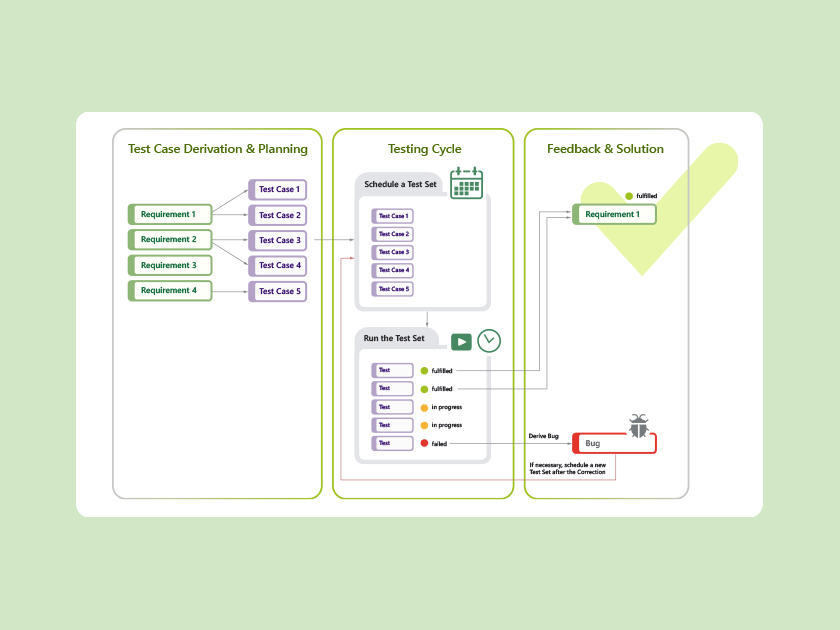
What is Test Management?
Why Quality Starts with Requirements: Test Management Explained Simply. Learn everything you need to know about test cases, test set execution, and integration with objectiF RPM.
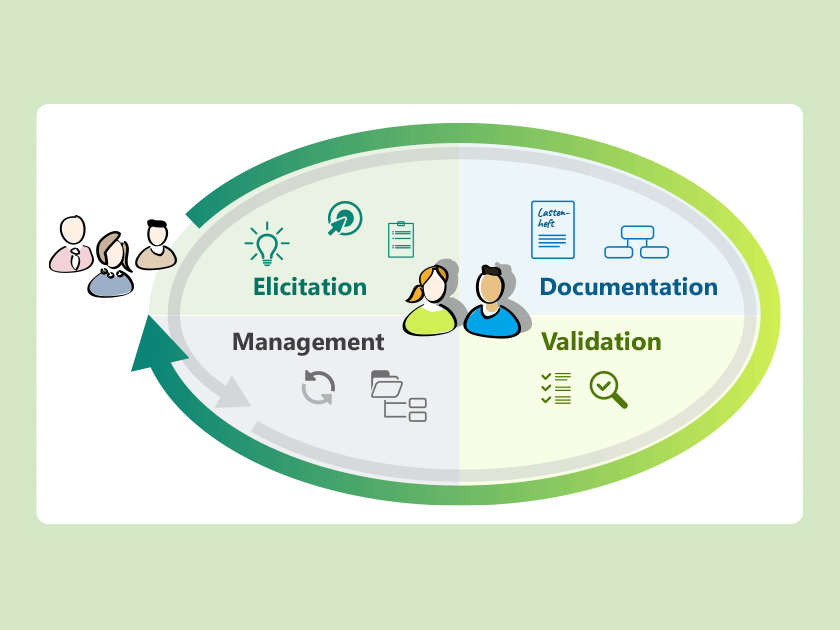
What is Requirements Engineering?
Requirements engineering (RE) involves eliciting, documenting, validating, and managing requirements. Learn how professional RE can safeguard your projects.