

Scope Creep occurs when additional features and functionalities are added to a project without assessing their impact on deadlines, costs, and resources, or obtaining official approval. It occurs when requirements “creep in” without going through a formal change process. This poses a serious threat to the project’s success because the increased workload can go unnoticed.
Just One More Thing…
Scope creep often begins with a seemingly harmless request. During a project discussion, a stakeholder might say,
“Since you’re already working on it, could you also add this small feature that we haven’t discussed yet?”
Without a clear process for evaluating and approving changes, the team agrees to the request. The problem is that the additional effort often goes unnoticed. As more small changes are added, costs increase, schedules slip, and project objectives become more difficult to achieve.

Scope Creep in the Triple Constraint
Scope creep is the natural enemy of the Triple Constraint. While the triangle calls for balance among time, cost, and scope, scope creep attacks the “scope” side of the triangle, causing it to expand uncontrollably.
Since resources and the timeline are usually fixed, this expansion inevitably causes instability in the entire project. Often, quality is the first to suffer as the team tries to compensate for the additional workload by cutting corners on testing or documentation.
Understanding Different Types of Scope Issues
In project management, there are various levels of scope-related issues that must be clearly distinguished from one another. The following table provides an overview of these issues:
| Description | Typical Cause | |
|---|---|---|
| Scope Grope | The project scope cannot be clearly defined at the outset. | Lack of vision / unclear objectives |
| Scope Leap | The scope of the project will change radically over time, rather than gradually. | Strategic shift / “pivot” |
| Scope Creep | The scope of the project is gradually expanding. New requirements are being added without oversight. | Informal stakeholder requests |
| Gold Plating | The team deliberately expands the scope of the project by providing unsolicited additional services in order to “impress” the client, often without consulting the client about the additional costs. | Team ambition beyond the agreed scope |
What Causes Scope Creep?
The reasons are varied and do not always lie solely with the “demanding” stakeholders:
- Unclear or insufficiently specified requirements
Stakeholders do not understand what is included in the scope. - Lack of stakeholder involvement and communication
Stakeholders are only involved at the beginning and end of the project. - Exaggerated management promises
Unrealistic commitments are made without consulting the development team. - Lack of change management
Requests are accepted “on the fly” via email or verbal communication.
Control Measures
- Formally document requirements: Record all requirements using a tool with a uniformly structured description. This lays the foundation for change management.
- Ensure traceability: Store requirements centrally along with their relationships to stakeholders, their goals, test cases, and system components.
- Use visual models: Use graphical models, such as use case or system context diagrams. This will allow you to clarify the project scope for stakeholders and align their expectations regarding the product.
- Introduce reviews: Conduct joint reviews of requirements and approve them through a formal process. This ensures the quality of the requirements.
- Use baselines to document the development status: Establish baselines for requirements that have been reviewed and accepted. These baselines create a reference point for development that can be referred to when new requirements arise during the course of the project.
- Implement a change management process: Use a defined procedure, ideally supported by a tool, to prevent change requests from entering the project through informal channels, such as verbally or via email, without an impact analysis and risk assessment. Ensure that every new requirement goes through this process.
Detect Scope Creep Early
In Agile project management, the main pain points are usually a lack of overview when scaling (many teams/backlogs) and a lack of traceability for stakeholders.
This leads to:
- “Agile chaos“ with large backlogs: Simple task boards quickly become confusing when hundreds of requirements need to be prioritized across multiple teams.
- The “reporting-gap“: Stakeholders demand reliable forecasts and status reports, but the team only provides Agile metrics, such as velocity and burn-down, which are difficult for management to interpret.
With objectiF RPM, however, you can manage complex backlogs across multiple teams. Use them interactively for planning and rest assured that traceability is maintained.
Unlike simple task boards, objectiF RPM offers dashboards that link agile progress (e.g., burn-down charts) to strategic project goals.

Stay in Control of Every Requirement and Change
Gain full visibility into project scope, assess impacts instantly, and keep even complex projects on track with objectiF RPM.
FAQ
Is scope creep always bad?
Changes are normal. Only uncontrolled changes are “bad.” A good change management process transforms unwanted scope creep into a constructive expansion of scope.
What is the most dangerous warning sign of impending scope creep?
It’s when people say things like, “It’s just a small change. We can handle it on the side.” Informal agreements replacing formal documentation is the first sign of creeping expansion.
Does scope creep occur in Agile projects?
Although agility embraces change, scope creep can still occur, specifically when the Product Backlog grows unchecked and there are no adjustments to prioritization or the team’s capacity. “Sneaking” items into the current sprint is a classic example of scope creep.
Can a tool prevent scope creep?
A tool alone cannot, but it makes scope creep immediately visible. In objectiF RPM, for example, requirements are linked to test cases and effort estimates, so changing one aspect automatically affects the entire structure. Transparency within the tool is the best defense against “creep.”
How does scope creep affect quality, the fourth dimension?
Since deadlines and budgets are typically set in stone, additional work resulting from scope creep often leads to compromises in quality, such as fewer tests and incomplete documentation. This significantly increases technical debt.
Want to Know More?
Explore more knowledge base articles online or download one of our whitepapers.
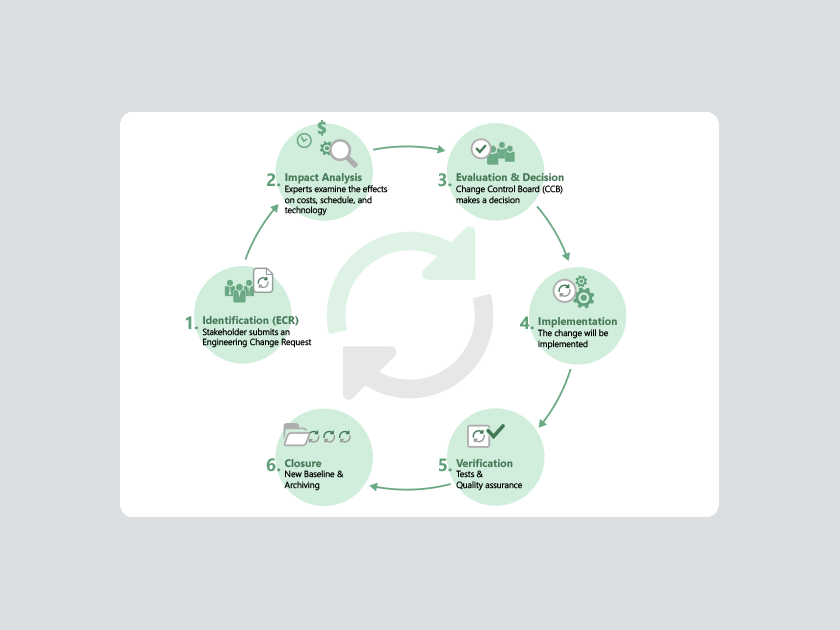
What is Change Management?
Change management ensures that changes to systems, products or software are assessed and implemented in a controlled way. In systems engineering, a structured change process helps identify impacts early, reduce risks and safeguard technical integrity, traceability and compliance.
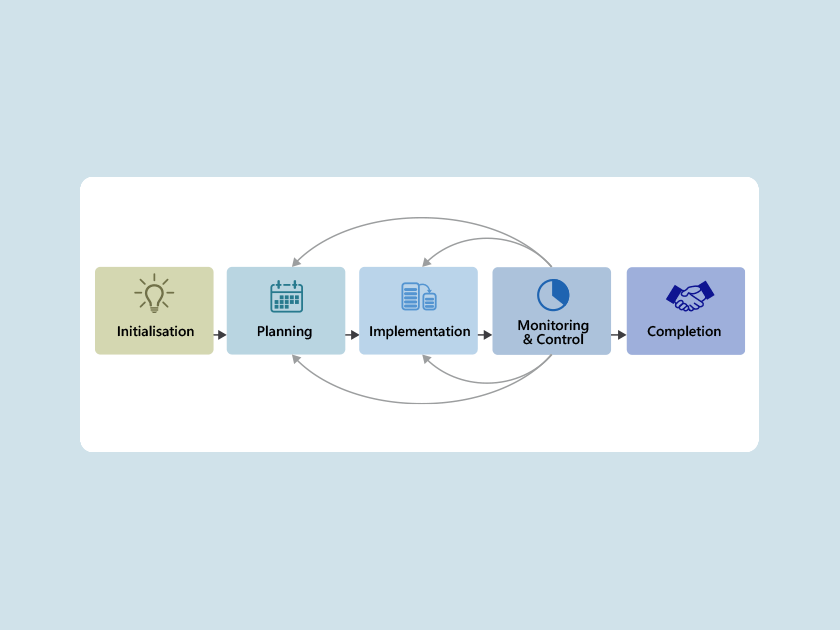
What is Project Management?
Project management provides structure, transparency, and planning certainty for complex projects. Using the right methods, clear processes, and centralized management, companies can balance time, budget, and quality, whether they use traditional, agile, or hybrid approaches.
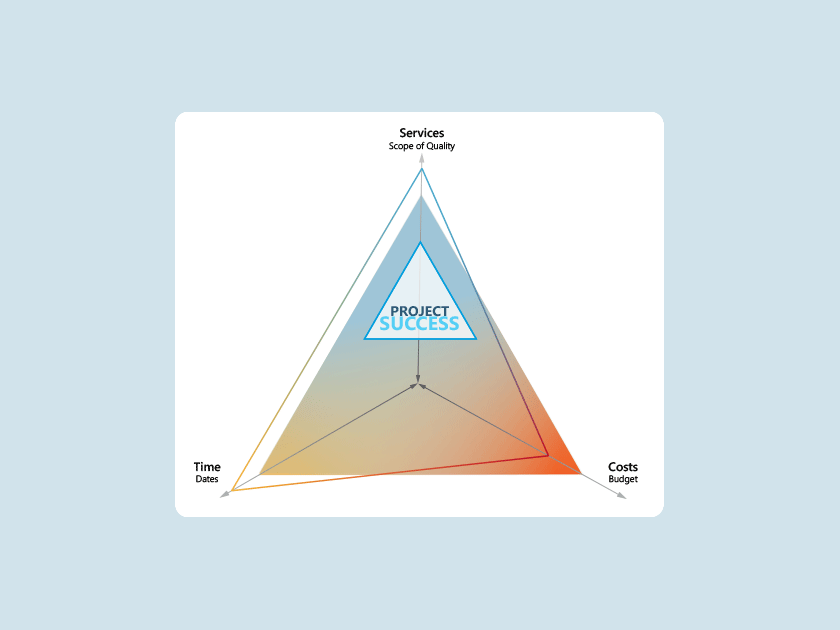
What is the Triple Constraint?
The triple constraint represents the three key success factors of a project: time, cost and scope. If one of these factors changes, it inevitably affects at least one of the other two. Project management therefore means continuously balancing these factors and addressing conflicting objectives at an early stage.
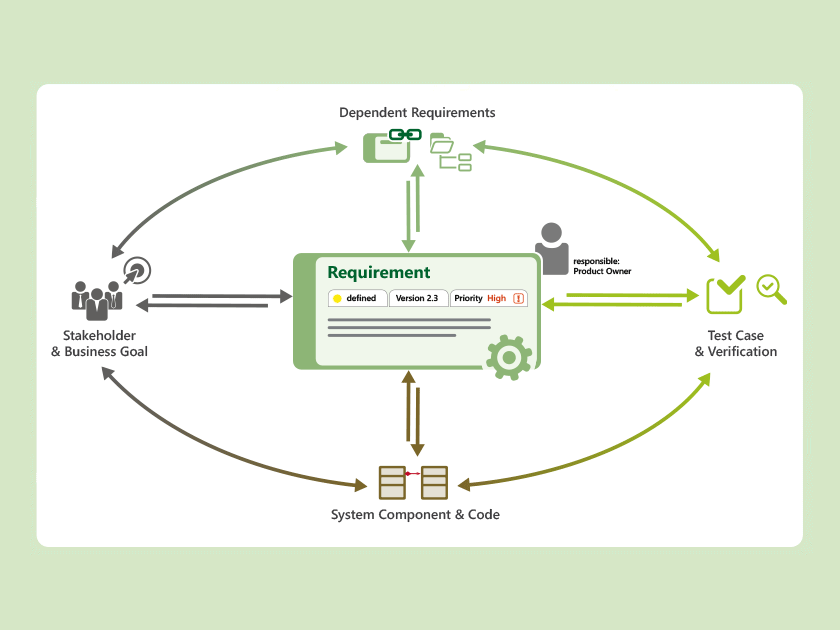
What is Requirements Management?
Requirements management (RM) involves managing requirements throughout their lifecycle. Learn how RM differs from requirements engineering and how tools can assist with the process.
objectiF RPM – Whitepaper
Increase your business agility. Get to know objectiF RPM in this whitepaper. From the needs of stakeholders to IT systems for successful business.

objectiF RM – Whitepaper
Requirements Engineering for Software and Systems. Read about benefits and options of objectiF RM in this whitepaper.